
Recently I attempted to have an MRI. I say ‘attempted’ because I failed. Miserably. Previously-unrealised claustrophobia swept in and took over… big time. Crying, sweating, shaking and stricken with headache and nausea, I was pretty quickly pulled out of the tunnel of terror and sent on my way.
But while I may now be overcome with unpleasant sensations at the very thought of an MRI (or any closed space) the technology is increasingly being used in research with very interesting results.
We all know it is impossible to listen to music and not be moved. What music moves us, how much and why are mysteries that have for many years intrigued both musicians and scientists. Last year a study* was undertaken at the Montreal Neurological Institute at McGill University in Canada to find out some of these answers.
 While most previous studies had used only strongly-emotive music, this study had participants bring in music they preferred. This ranged from classical music through to techno, country, film soundtracks and heavy metal. The participants were then studied using MRI while listening to 60 different excerpts of new music, based on their musical taste. They also had the option to ‘buy’ a song in a mock online store, based on the 30-second samples.
What was discovered was that a particular part of the brain becomes active when we hear a piece of music for the first time. This part of the brain is the nucleus accumbens, a zone that is operated by the chemical dopamine, which plays a major role in reward-motivated behaviour.
One of the researchers, Dr Valorie Salimpoor, said, “What’s cool is that you’re anticipating and getting excited over something entirely abstract – and that’s the next sound that is coming up.” The more a participant liked the music they were hearing, the more stimulated the ‘reward region’ of the brain became.
Because our brains are so well-suited to using patterns to predict what will happen next, we are constantly making predictions. Even if the piece of music we are hearing is new, our brains are predicting – based on past musical experiences – how it will unfold. If we enjoy the music more than predicted, the nucleus accumbens (partnering with pattern recognition and high-order thinking centres) fires off with delight.
“What makes music so emotionally powerful is the creation of expectations. Activity in the nucleus accumbens is an indicator that expectations were met or surpassed,” Dr Sapimpoor said.
So if you want to get that dopamine pumping and reward your brain, treat yourself to some new music. Launch your Spotify app or go through some recommendations in iTunes. You never know what joys you may discover.
And I promise you won’t have to visit an MRI machine to feel the benefits 🙂
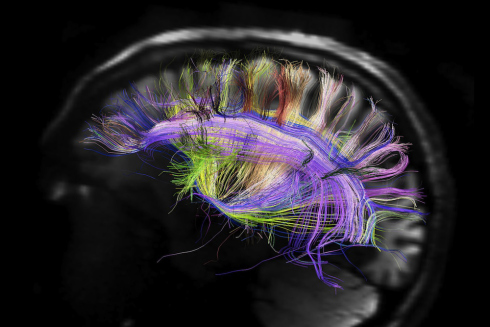
Credit: Image courtesy of MGH-UCLA Human Connectome Project.
If you are considering music lessons for your child or for yourself, please contact me to discuss the options. Piano lessons are conducted at my studio in Wallsend, NSW or mobile lessons are available in the eastern suburbs of Lake Macquarie.
* The study is published in the journal, ‘Science”.Salimpoor VN, Benovoy M, Larcher K, Dagher A, & Zatorre RJ (2011). Anatomically distinct dopamine release during anticipation and experience of peak emotion to music. Nature neuroscience, 14 (2), 257-262 PMID: 21217764
 Let them write on their music (in pencil, of course). While you don’t want them writing in every single note name, marking up spots where they are having trouble every time may help. It might be the note names of a tricky passage or an unusual timing count that trips them up. Having a little help written in may increase their confidence with the whole piece.
 Because of this, it is not really appropriate to take the, “we’ll try it for a few months and see how it goes” approach. The commitment needs to be made for at least a couple of years. It’s about being realistic about what it takes to gain musical skills.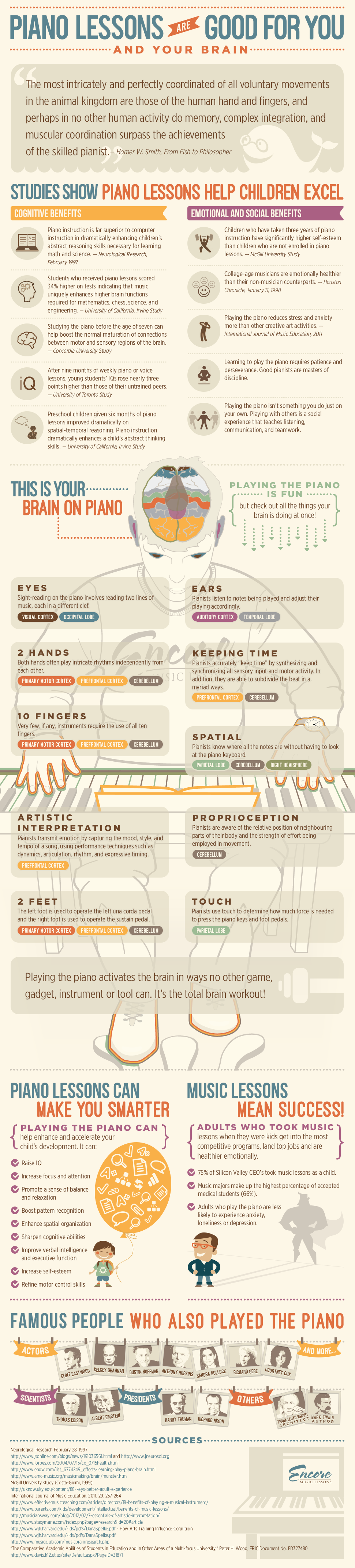
 merri bell music