
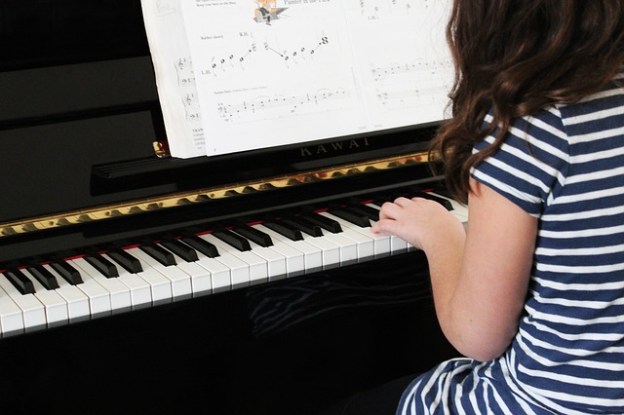
Every student knows they need to practise regularly. They are taught how to practise effectively and are provided with a list of what they need to work on. But sometimes it’s useful to have a reminder about why this is so important.
1. Muscle Memory and Technical Development
Consistent practise builds muscle memory, allowing fingers to develop the strength, dexterity, and coordination needed for more complex pieces. Regular repetition trains the hands to execute techniques automatically, reducing the mental effort required and enabling students to focus on musicality and expression.
2. Progress and Achievement
Regular practise creates measurable progress. Students who practise consistently advance through repertoire faster, master new techniques, and experience the satisfaction of improvement. This builds confidence and motivation to continue learning.
3. Reinforcement of Learning
What’s learned in lessons needs to be reinforced through practise. Without regular repetition between lessons, students forget concepts and techniques, making each lesson feel like starting from scratch. Consistent practise ensures concepts stick and build upon each other.
4. Discipline and Goal-Setting
Piano practise teaches valuable life skills like discipline, time management, and goal-setting. Students learn that consistent effort over time produces results – a lesson that extends far beyond music into academic and professional success.
5. Enjoyment and Musical Expression
Only through regular practise do students develop the technical fluency needed to truly enjoy playing music. Once the mechanics become automatic, they can focus on interpretation, dynamics, and emotional expression – the aspects that make music truly rewarding.
If you are considering music lessons for your child or for yourself, please contact me to discuss the options. Piano lessons are conducted at my studio in Wallsend, NSW.

 There are various benefits for singing during piano lessons:
 It is certainly more difficult to encourage students to sing than it is to get them to play, as singing seems to involve displaying a little more of ourselves, but it is this inner emotion we are trying to release. This is what we need in our playing. Once the students open up and let go, understanding how the music feels, they can really put some energy and feeling into what they’re playing.
 Athletes warm up before a game. They train with lots of repetitious drills so their body learns those actions and they can incorporate them into their game. Dancers work through lots of exercises to develop their physical skill. They also warm up before they dance. This is accepted as normal. Playing the piano incorporates a large portion of physical skill. It requires a strong technical foundation. Trying to play pieces of increasing difficulty without gradually building the physical skills required is like running a marathon because you understand the mechanics of running but haven’t trained. The result will be frustration.
 This is a no-brainer and has been covered in many previous blog posts. Lessons are generally as short as 30 minutes, and are when new concepts and material are taught, not where practise happens. Those concepts then need to be consolidated with practise at home, or at the next lesson you will still be in exactly the same place you were the week before. Practise is about feeling accomplished; setting a goal (even a small one) and achieving it.
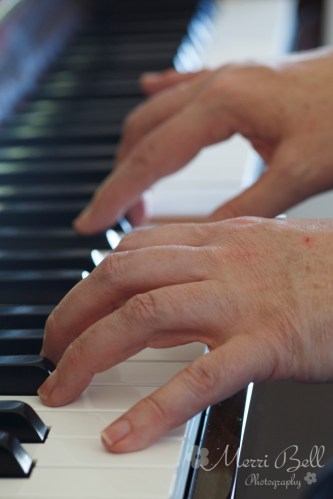 Having your piano in an out-of-the-way location. Having your piano or keyboard tucked away in a spare room or an area of the house not regularly accessed doesn’t encourage regular practise. Out of sight, out of mind! Have your piano in a prominent position in the house so it acts as a constant reminder.
 4. Encourage them to really listen to what they are doing… and listen yourself. If they play a section a few times and it changes from halting to fluent, congratulate and encourage them. Ask them what they are trying to achieve.
 Blob Chorus by Lumpty Learning is one such app, which introduces students to basic pitch recognition in a fun way. It is used in thousands of schools around the world because it also works well in a group setting, but its simplicity means it is also totally suitable for individual lessons.
 Although the game always opens with the default of three blobs, you can set the game to as little as two (which is the best place to start). As you improve, you can increase the number of blobs in the choir. The maximum is eight blobs, which is very difficult.
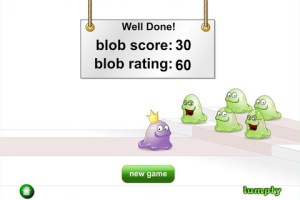 The game is separated into groups of ten questions; after each set of ten you will receive a score and an overall rating.
 Always starting from the beginning. If you start a piece at the beginning every time you play it, you will find you quickly become proficient at the start of the piece but less so as the piece goes on. I often tell my students to start at the part they find the most difficult, work on that part and then incorporate it back into the song.
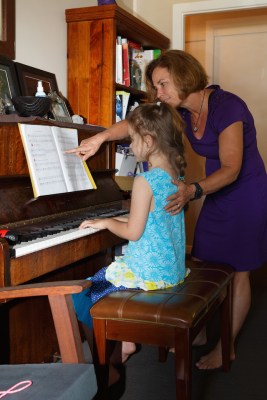 In this first part of a two-part post, we will look at some of the ways you can help your child that don’t involve the music itself. Part two (in two weeks) might surprise you with the ways in which you can be involved with the content of their practise.
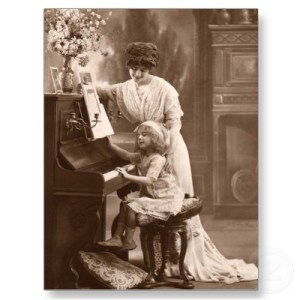 6. Ensure they are sitting correctly at the piano. Keep an eye on them and if you see them slouching, suggest they hold their back straight. This will not only stop body fatigue but will also help them balance their arms and hands properly. Their teacher should also be able to show you how they should be holding their hands, so you can keep an eye on that as well.
 One little girl sometimes asks for them to watch as she plays and she arranges them either on the music stand, or on top of the piano, and then performs for them. They bring her confidence.
