
“Don’t practice until you get it right. Practice until you can’t get it wrong.”
– Unknown
With our longest holiday period of the year upon us here in Australia, students will have six weeks in which they will be practising with no input or guidance from their teachers. That’s a long time to be getting nowhere if they aren’t practising effectively and efficiently. Two weeks ago I posted about some common mistakes make by students when practising and how to overcome these issues.
Following are some more tips that will help you practise effectively not just over the summer holidays, but at any time:
Using incorrect fingering. Sometimes the fingering noted on the music may seem either unimportant or too difficult, but the truth is it is always there for a reason. It is usually moving your hand to where it needs to be for optimum movement (and minimal confusion). Being consistent with fingering also calls upon your muscle memory, allowing you to learn the piece with more stability.
Practising too fast. I know I have mentioned this many times before, but it is so important to slow down and take your time. It can be frustrating when you know how the piece sounds and you just want to play it at speed so the familiar sound and what you are playing are closer. But playing too fast doesn’t allow you to really pay attention to what you’re playing or note the areas that need additional work. It’s much easier to increase speed once the piece is correct than it is to have to slow down later and try to ‘unlearn’ mistakes.
 Having your piano in an out-of-the-way location. Having your piano or keyboard tucked away in a spare room or an area of the house not regularly accessed doesn’t encourage regular practise. Out of sight, out of mind! Have your piano in a prominent position in the house so it acts as a constant reminder.
Not counting out loud. Even though I have been playing for over 40 years, I still find counting out loud is the easiest way to get my mind around a complicated new passage. It is particularly crucial for beginners and works excellently in conjunction with the point above about slowing down. Counting out loud helps develop a sense of rhythm; the physical act of counting makes the rhythm more dominant and the hands tend to follow.
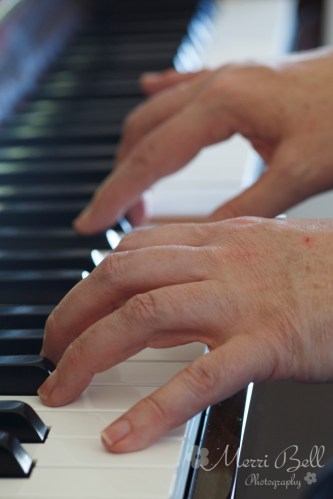
Watching your hands instead of the music. When you watch your hands instead of the music, you tend to learn the piece with mistakes; playing by ear and using memory take over from reading what the music is asking you to play. When you do need to look down to your hands, try to just avert your eyes rather than move your head, or it is more difficult to re-find your place on the music when you lift your (moved) head back up.
Practising “in bulk”. Shorter, regular practise sessions are far more effective than one very long one. Once you are aware you are becoming mentally fatigued, you should stop practise and come back to it when you feel more alert.
If you are considering music lessons for your child or for yourself, please contact me to discuss the options. Piano lessons are conducted at my studio in Wallsend, NSW or mobile lessons are available in the eastern suburbs of Lake Macquarie.
 4. Encourage them to really listen to what they are doing… and listen yourself. If they play a section a few times and it changes from halting to fluent, congratulate and encourage them. Ask them what they are trying to achieve.
 Always starting from the beginning. If you start a piece at the beginning every time you play it, you will find you quickly become proficient at the start of the piece but less so as the piece goes on. I often tell my students to start at the part they find the most difficult, work on that part and then incorporate it back into the song.
 merri bell music