Music is a language. It contains phrases, just the same as the spoken – or sung – word. How we deliver these phrases, how we emphasise particular musical words and sentences, delivers a certain meaning to our audience. When we are trying to learn a piece, it can be difficult to look beyond the notes on the page. Singing the music allows us to feel it moving forward, with all its twists and turns and emotion, and to develop an understanding of what we are aiming to ultimately achieve when playing a piece.
 There are various benefits for singing during piano lessons:
- When singing along with what we are playing, we learn to match the pitch of our voices with the piano, which is a great ear-training tool for ascertaining both pitch and intervals.
- Being aware of where we need to breathe when singing helps to understand where our hands also need to take a little breath. Slurs are written into music to tell us when to take this tiny break (an upward lift), but it can feel mechanical without understanding the feeling behind the phrasing.
- Perhaps most importantly, singing is great for allowing us to feel the emotion of a piece (particularly if it has lyrics). We are able to tell the story with more musicality and expression, moving it forward with purpose.
“By exploring the voice, we teach important musical ideas and encourage piano students to achieve a higher level of musicianship”.
Jennifer Merry, Keyboard Companion, Spring 2005
 It is certainly more difficult to encourage students to sing than it is to get them to play, as singing seems to involve displaying a little more of ourselves, but it is this inner emotion we are trying to release. This is what we need in our playing. Once the students open up and let go, understanding how the music feels, they can really put some energy and feeling into what they’re playing.
Sight singing is more formal. Used as a forerunner to playing the piece, it helps students to not only develop aural skills and sight reading skills, but learn to get a feel for a piece from sight. Being able to pitch the piece and develop a good idea of how it will sound before starting to play is a great benefit.
So if your child arrives home from a lesson and says, “Today we sang,” then you’ll know they were learning to develop their musical expression.
If you are considering music lessons for your child or for yourself, please contact me to discuss the options. Piano lessons are conducted at my studio in Wallsend, NSW.
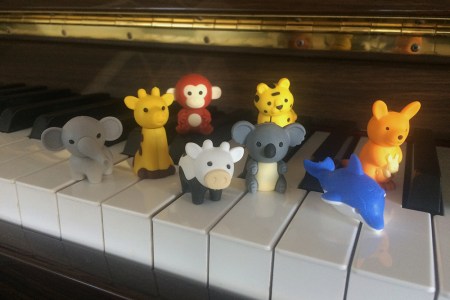 One little girl sometimes asks for them to watch as she plays and she arranges them either on the music stand, or on top of the piano, and then performs for them. They bring her confidence.
 I have written before about the reasons why I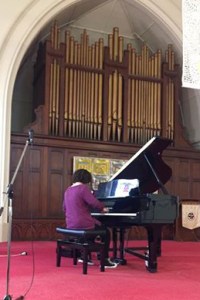


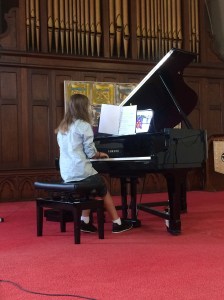

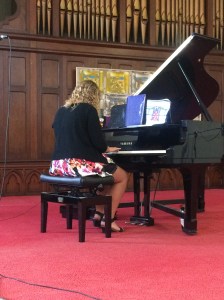
 Here are some ideas for ways you can help your child prepare for their big moment:
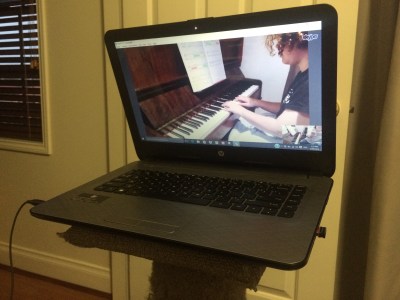 Lessons are missed for a variety of reasons apart from being too unwell to attend. Sometimes the student feels well enough for a lesson, but doesn’t want to spread germs (which is appreciated). Or the teacher may be in that position. Transport also makes the list of reasons for absences; if the student can’t get to the studio, they can still be available at that time, from the comfort of their own home. Weather and traffic issues are other problem areas.
 The student needs to be responsible for their own note-taking and marking their music. A good connection is required (wired is more reliable than wifi) and it helps if other household members can refrain from using the internet during the lesson. Larger screens are better (laptop, iPad for example), positioned high enough that the keyboard and hands can be clearly seen. A little ingenuity may be required, but that’s all part of the fun.


 merri bell music