
Aural training – or developing ‘a good ear’ – is such an important part of becoming a musician. It helps with everything from being able to harmonise through to simply recognising if you’ve made a mistake. But not everybody is born with a naturally good ear and even those who are can still learn to better refine it.
So how do we help our students develop their aural skills without the drudgery of drills and exercises? We use fun apps!
 Blob Chorus by Lumpty Learning is one such app, which introduces students to basic pitch recognition in a fun way. It is used in thousands of schools around the world because it also works well in a group setting, but its simplicity means it is also totally suitable for individual lessons.
The premise of the game is simple: a number of green blobs have formed a choir and they are singing for King Blob (who is purple and wears a crown). Each blob sings a note and then King Blob sings a note. The note sung by the king is the same as a note sung by one of the blobs. But which one? This is what you need to identify.
 Although the game always opens with the default of three blobs, you can set the game to as little as two (which is the best place to start). As you improve, you can increase the number of blobs in the choir. The maximum is eight blobs, which is very difficult.
If the incorrect blob is selected, that blob will explode, but you are able to select another blob and continue doing this until the correct blob is selected. At any time you can click the ‘hear blobs again’ button at the bottom to hear the remaining blobs sing their notes again.
 The game is separated into groups of ten questions; after each set of ten you will receive a score and an overall rating.
Free on the Apple app store (but not for Android), the Apple version can be found here.
If you don’t own or have access to an iPad or Android tablet, never fear! The game is also available in a web version here; it just requires an internet connection.
They not only look cute, but they sound really cute as well 🙂
If you are considering music lessons for your child or for yourself, please contact me to discuss the options. Piano lessons are conducted at my studio in Wallsend, NSW.
 However, for those who are going to be away from their piano for a period of time, standard practising obviously isn’t possible. I have
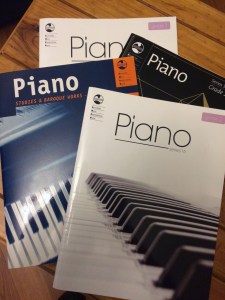 The first point above makes the combination of issues somewhat specific to Australia, as the Australian Music Examination Board (AMEB) is the dominant player in providing instrumental assessments in Australia only, but the problem of less available practise time and younger beginners is lamented by teachers worldwide, whether in relation to exams or just general progress.
 Following are some tips that can help you make the maximise the effectiveness of your practise time:
 4. Schedule your practise sessions – While this seems self-explanatory, this technique will only work well when in conjunction with the tip above – if you schedule in time, you must be prepared to give that time your full concentration. For some, the best time may be first thing in the morning when the mind is fresh (and you will feel accomplished at having started your day by completing a major task) while others may need to wait until the kids are in bed and the household jobs completed.
 7. Keep a practise journal – A practise journal is a log of your practice sessions, including what you practise and for how long. It can be a notebook, a Word document, a spreadsheet or whatever works for you. At the end of each practise session, write down which pieces you worked on and how long you spent on each one. This can serve to force your mind to focus and may also help with planning future practise goals (in fact, it can be an interesting exercise to compare it to your original goals).
 9. Study away from the piano – This has been covered in more detail previously


 In mid-June, an assortment of students from our little piano studio in Wallsend sat for practical exams with Australia’s premier examining body, AMEB (Australian Music Examinations Board).

 merri bell music