
A big part of playing any instrument is the time you can spend with it, the companionship it provides and the joy it brings as you play. You want to be able to spend as much time as you choose creating music. This can’t happen if your body is protesting.
How you sit at the piano shouldn’t feel forced – the correct posture is really very natural. If it wasn’t, you would be constantly putting strain on your body (and remember, pianists use their whole body to play). More than anything else, you want loose, fluid wrists; if other parts of your upper body are tense, this tension will transfer to the wrists and hands.

Graphic courtesy of instructables.com
Being at the correct height for the keyboard is paramount, and this is one seating problem that is a big issue for children, particularly smaller kids. If they are sitting at a level that necessitates them reaching up to the keys, the only way they will keep their hands in the correct position is to be constantly raising and tensing their shoulders. A cushion can help.
If their feet don’t reach the floor, try a small stool under their feet, or some large books.
In the half an hour each week I am with a student, I can reinforce (often many times) correct posture and positioning, but the time spent at their instrument throughout the week is where the habits will form. Please make sure these are good habits.
How you hold your hands when you play is of vital importance and, as mentioned above, it should be very natural. Drop your arms loosely by your sides and then lift up from the elbow; the position into which your hand naturally falls as you lift it is the perfect playing position. The same shape will form if you pretend to shake water from your hands (I use this action with young kids during lessons). Natural and unforced.
The following infographic (developed by Hoffman Academy) shows some great tips for good posture.
 If you are considering music lessons for your child or for yourself, please contact me to discuss the options. Piano lessons are conducted at my studio in Wallsend, NSW.
 There are various benefits for singing during piano lessons:
 It is certainly more difficult to encourage students to sing than it is to get them to play, as singing seems to involve displaying a little more of ourselves, but it is this inner emotion we are trying to release. This is what we need in our playing. Once the students open up and let go, understanding how the music feels, they can really put some energy and feeling into what they’re playing.
 Don’t slack off on your practise and then cram it all in during the week before. Playing piano is a (cumulative) physical skill as well as mental; you wouldn’t run a marathon if you had only been training for a week.
 Not just between your child and their instrument, but also between your child and music in general. There have been lots of studies proving the benefits of music to our brains, but these benefits won’t occur by just turning up to a 30-minute lesson once a week. They will also learn more about their instrument – how it feels, how it sounds, what it can do – and will become more attuned to how they can control what sound it can produce.
 To play an instrument, your child’s brain is processing a great number of details simultaneously, combining rhythm, pitch, technique, body positioning, fine motor skills, dynamics, texture, tonal shading and more. The synapses being developed in the brain of a musician are unique.
 Piano skills don’t instantly appear, but grow over time. Having a goal towards which they can steadily progress gives your child the opportunity to understand the concept of steady progress and delayed gratification.
 When they play sport, they accept they will have to go to training sessions. Many of them probably practise their ball skills at home. But they don’t call it practise.
 These days there are coaches for everything – fitness coaches, vocal coaches, sport coaches, diet coaches, life coaches, drama coaches, executive coaches, dance coaches. The list goes on and on.
 Try it out with your kids. Change the language. See if they are happier to rehearse or to train or even to prepare for their next coaching session. Modify the vocabulary and find what works for them. Whether we like it or not, neglecting practise – or not practising enough – is not going to get them anywhere. But perhaps rehearsing or training will.
 The Most Addicting Sheep Game is a seemingly simple rhythm app for the iPad where jumps and rolls must be perfectly timed to the music by tapping or swiping on the screen. It is easy to learn, but tricky to master.
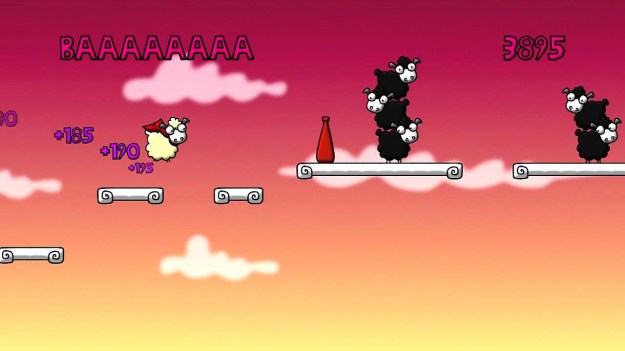 The sheep can jump at either one, two or four beats and can also jump two different height levels. An obstacle on the path – such as a tower of balancing sheep – requires a swipe to knock down. This means, as with most things to do with playing music, your brain is concentrating on multiple things at the same time. The picture above shows one beat and two beat lengths, a double jump and single jumps plus swipes. All of that would take less than five seconds to execute. Plus it all has to be done strictly in time with the music!
 The graphics are cute and the music is catchy. At first the music can be annoying – especially when you aren’t being successful – but all of a sudden you will find it’s an integral part of the mood and the fun.
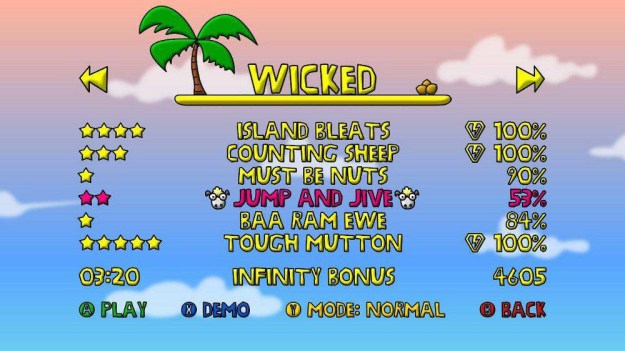 You can find it
 2. Set a goal. No matter what your level, from beginner to advanced, you can benefit from setting some practise goals. You may want to learn a new song, memorise a piece or even improve your sight reading. Set interim goals for yourself along the way so you can check in and make sure you’re on track.
 4. Listen. While this won’t actually exercise your playing muscles, it is a very important part of learning and studying music. Listen to lots of different pianists and listen to other instruments as well. Children tend to only know the music styles listened to by their parents, so its a good opportunity for them to be exposed to a variety of genres. One of my students has grown up with the classic rock of her parents but has recently discovered musical theatre soundtracks (thanks, YouTube). She is enthralled with how the mood of the music tells a story and often comments on “the power” she hears in songs. Expose your musical ear to all sorts of things. You won’t like them all, but you will find plenty you do like.
 Blob Chorus by Lumpty Learning is one such app, which introduces students to basic pitch recognition in a fun way. It is used in thousands of schools around the world because it also works well in a group setting, but its simplicity means it is also totally suitable for individual lessons.
 Although the game always opens with the default of three blobs, you can set the game to as little as two (which is the best place to start). As you improve, you can increase the number of blobs in the choir. The maximum is eight blobs, which is very difficult.
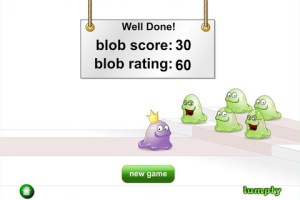 The game is separated into groups of ten questions; after each set of ten you will receive a score and an overall rating.
 merri bell music