Tag Archives: children music

App Review “Music for Little Mozarts” by Alfred – Piano Teacher in Wallsend, NSW

Can you tell whether sounds are a low or high pitch?

Is the music going up or going down?

Does what you see match what you hear?

Beethoven Bear and Mozart Mouse are here to help you out!

‘Music for Little Mozarts’ is an app that was conceived for preschool and kindergarten-aged students, but if you don’t mind the cuteness, it is helpful for beginners of all ages. I mostly use it with students to help develop aural awareness, but it also contains some basic note recognition  and rhythm games.

This app corresponds with the the Music For Little Mozarts piano method books (published by Alfred), but the activities are still extremely useful even if you aren’t using those method books.

The following image shows the range of activities available in the app:

Piano Teacher in Wallsend NSW

Piano Teacher in Wallsend NSWThe two I use most are the first two, as they are great early ear training activities asking only to tell the difference between two things. Is the note played a high note or a low note and are the notes going up or down? The interface is easy… just tap the red circle to hear the sound and then drag the same circle to either Beethoven Bear or Mozart Mouse, depending on your answer. For example, the image on the right shows the ‘Notes Going Up or Down’ activity. The student taps the red circle and hears a succession of notes. If they think the melody is moving from lower to higher notes, they drag the circle up to Mozart Mouse sitting at the top of the staircase. If the think the melody is moving downwards, they drag the circle to Beethoven Bear.

The app will not let the circle stay in the area of the wrong answer; it needs to be answered correctly before moving on to the next question.

Some of the activities don’t require the student to answer a question and act more as a teaching reinforcement. The child can play any note on the keyboard and the app will show them where it sits on the staff. After that, they can move on to the activity where they need to identify the keyboard location of a note after seeing it on the staff.

Piano Teacher in Wallsend NSWThe app also has a simple rhythm exercise, using the note values that are commonly learnt in their first few lessons. Beethoven Bear and Mozart Mouse are each standing under a different rhythm. The student taps the red circle to hear a rhythm and then drags the note to the character standing under the rhythm they think is correct. Once again, the question needs to be answered correctly before moving on.

Aural training is such an integral part of a complete music education, so it’s great to find an app that approaches it in such a simple way for beginners. The first two activities are also great for discovering the aural capabilities of a new student… but they don’t even know you’re testing them.

If you are considering music lessons for your child or for yourself, please contact me to discuss the options. Piano lessons are conducted at my studio in Wallsend, NSW.


Using Piano Pedals – Piano Teacher in Wallsend, NSW

When new students start with me, I always open up the piano and let them see the inside and how it works. Nearly without exception, the part that fascinates them the most is the mechanism for the pedals. They love to play with the pedals, as they can see and hear at the same time the differences depressing and releasing the pedals make.

The two or three pedals on your piano help make your playing dynamic and interesting, helping to provide tonal shading. However, there’s usually a fair bit to learn before the pedal can be introduced; you need to crawl before you can walk. By the time they get to use the pedal, students are usually pretty keen!

Correct use of the pedal involves placing your heel on the floor in front of the pedal so the ball of your foot rests comfortably on the pedal. Angling the ankle downwards should then depress the pedal, while bringing the ankle back up again (gently, or it will ‘clunk’) will release the pedal. Your heel should never leave the floor while pedalling as it is the pivot point. In the same way that playing the keys relies heavily on maintaining a loose, flexible wrist, playing the pedal relies on a flexible and comfortable ankle joint.

Composers use a few different ways to indicate when to depress the pedal, when to release it, and when to make a quick up-down pedal change. The picture below shows the different notations you will regularly see. A notch in the pedal line indicates a quick pedal change; lift your foot enough to allow the pedal to clear, and then quickly press the pedal down again.

Piano teacher in Wallsend NSW

Each instrument has its own pedal personality and you will learn the idiosyncrasies of your own over time, just as with the rest of the piano.

The right pedal:

The pedal used most often is the right pedal, called the sustain or damper pedal. It has two main functions:

  1. Allows the sound to continue after the keys are released.
  2. Bringing a deeper, richer and more resonant quality to the timbre of the sound.

One thing that pianists tend to overlook is that during the Classical period (the generation of Haydn, Mozart and Beethoven, or roughly from 1750 to 1820), the sustain pedal was a special effect. Therefore it should be used carefully when playing their music.

The left pedal:

The left pedal is called the una corda or soft pedal.

The main function of the soft pedal is to change the timbre of the sound, making it sound more distant. It can create a hushed atmosphere. Making the sound softer is of secondary importance – you should be able to play pianissimo (very softly) without it.

When the composer wants you to use the soft pedal, you see the indication una corda. Release it when you see the indication tre corda

Frank Hutchens’s ‘Two Little Birds’ requests at the beginning that both pedals (meaning right and left) are used simultaneously. The soft pedal gives the quiet atmosphere of the woodlands with the birds in the distance, while the sustain pedal provides the gentle, legato sound.

Piano Teacher in Wallsend NSWThe middle pedal:

This pedal has a different purpose depending on whether you are playing a grand piano or an upright.

  • On a traditional grand piano, the middle pedal is known as the sostenuto pedal. It acts as a damper for only the notes your fingers are playing as you depress the pedal. For example, if you  play a chord in the bass and then depress the sostenuto pedal, you can then play crisp, staccato notes in the treble but only the bass chord will remain sustained.
  • Older upright pianos didn’t normally have a third, middle pedal. For those uprights that do have three, the middle pedal is commonly known as the practice pedal. It mutes all the strings, allowing you to play as normal (including using the other two pedals) but softening the overall sound substantially. There is a notch to the left of the pedal so it can be locked in place. It is great for practising without disturbing your neighbours.

A good ‘pedalling instinct’ is based on knowledge, a very good hearing and mindful practice. This is why it is not used extensively with beginners. They need to develop an understanding of the music and how they play before introducing the pedal to enhance it.

The most important thing about pedalling is to not overuse it. It only takes a little overuse of the sustain pedal for everything to sound blurry. Always ask yourself how using the pedal is going to improve what you are playing.

If you are considering music lessons for your child or for yourself, please contact me to discuss the options. Piano lessons are conducted at my studio in Wallsend, NSW.

What’s the Rush for Exams? – Piano Teacher in Wallsend, NSW

“How soon will she be able to sit her first exam?” is a question often posed by new or prospective student parents, often with a memory of their own days learning the piano.

When I was a kid, it was normal to start lessons at the start of the year after turning seven. We concentrated on one extracurricular activity (or only a couple) and we could practise every day. In the middle of the following year, we were usually ready to sit the Preliminary grade AMEB exam.

But these days the answer to the ‘when’ question is as uncertain as the length of the proverbial piece of string and there are a number of reasons why.

Piano teacher in Wallsend NSW

  1. The AMEB Preliminary exam has been growing substantially and steadily more difficult. Pieces that appeared in my old First Grade books are now more likely to be found in the Preliminary repertoire. It was rare to venture beyond the basic five finger position and both key and time signatures were beginner level. In comparison, one of the pieces in the current Preliminary syllabus has interchanging compound and simple time signatures and two different pentatonic key signatures, as well as extending to both extremes of the keyboard.
  2. Kids these days have quite heavily-scheduled lives. They often have a list of extra-curricular activities that take up so much time, there is little time left for home practise. If they can’t practise effectively, they won’t improve at the rate that may be expected. Just turning up to lessons isn’t going to do the job. A student who can manage 90 minutes a week of quality practise will take double the time to progress as a student who can manage 3 hours (and this commitment to practise is pretty much out of the control of the piano teacher).
  3. Students are often starting lessons at a younger age. While I still prefer to not start them until around seven, many kids are starting as young as 4 and 5. This is a major factor in their exam-readiness. While there are many benefits to starting kids in music lessons earlier, without those language and maths basics behind them, it takes longer for them to learn concepts and many weeks of reinforcement activities are often required for each note or concept. Looking at the practise aspect, younger children’s attention spans are shorter and it can prove counterproductive to insist they sit at the piano for a specific amount of time. They also benefit greatly from having a parent sit with them and guide them through their practise, which becomes difficult when both parents need to work.
  4. Both parents working often means kids aren’t coming straight home after school. Afternoons spent at facilities such as OOSH offer no opportunity for scheduled practise time and the precious few hours left at home are rightly dedicated to family time.

Piano teacher in Wallsend NSWThe first point above makes the combination of issues somewhat specific to Australia, as the Australian Music Examination Board (AMEB) is the dominant player in providing instrumental assessments in Australia only, but the problem of less available practise time and younger beginners is lamented by teachers worldwide, whether in relation to exams or just general progress.

We can no longer expect piano students to follow the same progression as all the generations before them. Whereas once upon a time it was not uncommon for a beginner aged seven to spend eighteen months acquiring the basics and practising 20 – 30 minutes every day of the week to be ready to sit for their Preliminary examination (which were much easier), these days it is a rare student who is ready to be entered for this first examination within any less than two-and-a-half to three years of tuition.

If you are considering music lessons for your child or for yourself, please contact me to discuss the options. Piano lessons are conducted at my studio in Wallsend, NSW.

Filling Your Child’s Practise Tank (Part 2) – Piano Teacher in Wallsend, NSW

You have invested in piano lessons for your child and you believe in the benefits of music education. You love to see your child enjoying music, how hard they work and the joy it brings them.

Piano teacher in Wallsend NSWA couple of weeks ago, I posted – here – about ways you can show your kids how much you value the effort they are making with learning the piano and how these strategies can help to refill their “practise tank” when it is running low. Ramp up your involvement by trying some of the following ideas:

1. Balloon Surprise – Fill a kitchen cupboard with balloons that will spill out when your child opens the door. Ask him or her to help you with dinner and wait for the cupboard to open. On each balloon write one thing you love about your child’s piano playing (e.g. “I love to hear you play when I’m making dinner” or “I can hear so much emotion when you play” etc). Read all the messages together.

Piano Teacher in Wallsend NSW2. Surprise Sheet Music Shopping – When you collect your child from school, head off on a surprise trip to your local music shop and offer then the opportunity to choose any piece of sheet music or music book they like. Spend some time with them browsing through the options and finding just the right thing to take home. (Music stores are a treasure trove and can be overwhelming on the first visit, so ask the sales assistant to point you in the right direction for your child’s level).
3. Monday Morning Mirror Message – Use a white board marker to leave a message on your child’s mirror or the bathroom mirror before he or she wakes up. Write something like, “It makes me so happy to listen to you playing the piano.”

Piano Teacher in Wallsend NSW4. Post Office Package – Create a little package of special treats and a note about your pride in your child’s piano accomplishments. Mail it to your child and let them discover it in the mail box.

 

5. Build Excitement – If a recital, performance or exam is drawing near, build excitement with a countdown. Use a whiteboard, blackboard or even just a piece of paper on the fridge with “___ days until Jane’s piano recital” written on it. You could also use a calendar and cross off the days. Either way, the important thing is showing you value involvement in the performance aspect of music and this will ensure participation well into the teen years.

6. UnBEARable – Probably more fitting for younger kids… Find some teddy bear stickers and attach one to each of ten Post-It notes. Write, “It’s unbearable without your piano music. Please play for us” on each note and hide them around the house in unexpected places. Each time your child comes across one, they can play a piece for you.

7. Buddy Practise – Piano practise can be lonely, but a buddy on the bench can make a lot of difference. Even if you don’t possess a snippet of musical know-how, your child will appreciate you being there with them and will love answering your questions. Your child’s teacher will be able to give you questions and activities to help you show your involvement.

Piano teacher in Wallsend NSWAs mentioned in the first list of suggestions, most of these ideas require some planning and effort, but it will be so worth it when your child sees how much you value their hard work. It’s natural for their practise tank to run low; they only spend thirty minutes of the week receiving one-on-one encouragement from their teacher and the rest of the week it’s up to them to keep it going. So pick a few of these ideas, give them a try and watch your child’s confidence soar.

If you are considering music lessons for your child or for yourself, please contact me to discuss the options. Piano lessons are conducted at my studio in Wallsend, NSW.

App Review – “The Most Addicting Sheep Game” by Just So – Piano Teacher in Wallsend, NSW

Run. Jump. Roll.

Jump… double jump… swipe….

Ping!  Boing!  Whoosh!

Piano Teacher in Wallsend NSW

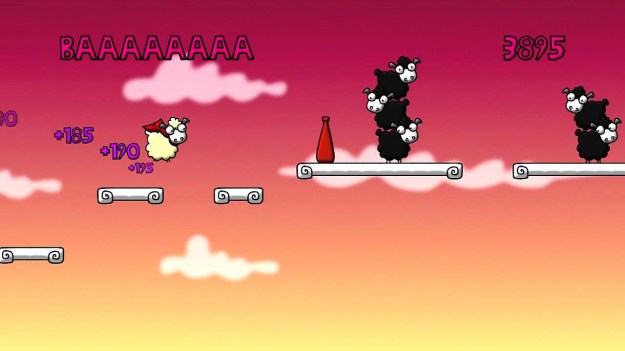
The Most Addicting Sheep Game is a seemingly simple rhythm app for the iPad where jumps and rolls must be perfectly timed to the music by tapping or swiping on the screen. It is easy to learn, but tricky to master.

On the surface, the connection to traditional music education could be considered faint, as it does not involve written rhythm and connecting that to an aural beat, but it is still definitely all about rhythm. The rhythms are very precise – a fraction of a second off and your sheep will fall through the cracks – and the higher levels are very difficult, so I feel it definitely has its place as a music education app. It is aural, rather than theoretical.

The premise is that you control a sheep that jumps to the beat, either with a single finger tap, two-finger tap, or swipe. The aim is to work through all the increasingly difficult levels, while also scoring maximum points. Plus, it has cute sheep!

Piano Teacher in Wallsend NSWThe sheep can jump at either one, two or four beats and can also jump two different height levels. An obstacle on the path – such as a tower of balancing sheep – requires a swipe to knock down. This means, as with most things to do with playing music, your brain is concentrating on multiple things at the same time. The picture above shows one beat and two beat lengths, a double jump and single jumps plus swipes. All of that would take less than five seconds to execute. Plus it all has to be done strictly in time with the music!

Piano Teacher in Wallsend NSWThe graphics are cute and the music is catchy. At first the music can be annoying – especially when you aren’t being successful – but all of a sudden you will find it’s an integral part of the mood and the fun.
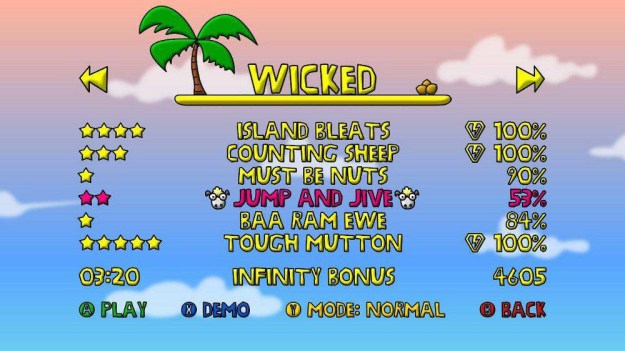

While you can get through to the end of a level by ignoring the height of the jump and always using two fingers, you will be penalised and won’t obtain the full score possible. If you’re anything like me and always want to see three stars at the end of a level, this just won’t do the trick.

The game begins with a Training mode, which has six different rounds within it. This mode teaches the basics of the single jump, double jump and swipe and then combines them all together. The levels after that are titled:

  1. Mild;
  2. Tricky;
  3. Wicked; and
  4. Grim.

Each of these levels contains six rounds. All levels, including training, also have an ‘infinity bonus’ level that doesn’t have the usual pre-determined ending, but will continue until you miss a jump and lose your sheep.Piano Teacher in Wallsend NSW

You can find it here in the Australian app store. It is not a free app, but costs only $1.29, a small cost for the amount of time it will keep you occupied.

If you are considering music lessons for your child or for yourself, please contact me to discuss the options. Piano lessons are conducted at my studio in Wallsend, NSW.

Filling Your Child’s Practise Tank (Part 1) – Piano Teacher in Wallsend, NSW

Kids who are involved in sport tend to get a lot of “proud parent moments” – Mum shouting encouragement from the sidelines or Dad giving an enthusiastic pat on the back post-game. Piano kids don’t get this as much. They slog away day after day perfecting their skill with little glory until it is time for an exam or a recital. So what can we do to change this?

The key is in having your child see that you truly value the piano and that you understand the commitment it takes to learn an instrument. Most importantly, let them regularly see how proud you are of their effort.

Piano teacher in Wallsend NSWYour child has a piano practise tank.  It’s usually about 3/4 full – fun pieces, enjoyable lesson activities and a love for music keep your kids going.  But occasionally that practise tank dips and the indicator light comes on telling you that a fill-up is due.  What can you do to fill this practise tank? Try some of these ideas:

1. Sneak-a-Practise – Leave your child a note on his or her pillow on a weekend night that says, “Tonight you get to stay up late. When everyone else is asleep, you and I are going to sneak to downstairs/music room/lounge room so I can listen to you play the piano.” Serve warm milk and a snack in the piano room and light it by candle light only. This will be a very special memory for your child.

Piano teacher in Wallsend NSW2. Piano Pancake Surprise – On a weekend morning when the routine is more relaxed and you are still all in your pyjamas, surprise your child with ‘piano pancakes’ topped with chocolate chip crotchets (or quavers, or rests or whatever symbol they know that takes your fancy). For each pancake on the plate, have your child perform a piece for the family while you all watch.

3. Exclaim with Pleasure – It doesn’t always need to be something fancy. Sometimes a genuine,  enthusiastic and unexpected, “Wow, that was amazing!” part-way through their practise is a great motivator.

4. Check In – If you are on your way home from work and your child is already home, call him or her (hands free) from the car and make a special request for some driving music as you continue on your way home to them.

Piano teacher in Wallsend NSW5. Tech Free Practise Time – Whenever your child sits down to practise, make the household tech free. Turn off the television, mobile phones, computers… everything. Let the home be filled with the music they are creating and allow yourself to be fully present. This also shows your child that you value what they are doing and how hard they are working.
6. Start a ‘Warm Fuzzies’ Bag – Hang a pillowcase from the top of the piano. For each practise undertaken during the week, write a note about something you noticed was done well (e.g. how your day was brighter for hearing the music, a piece was improved, he played your favourite etc). At the end of the week your child can open the bag and read all the notes.

Piano teacher in Wallsend NSW7. Host a Piano Picnic – Invite the whole family to a ‘Piano Picnic Dinner’. Spread a blanket on the floor near the piano and serve some special picnic fare – cheese and crackers, tea and biscuits. In between bites, have your child provide the dinnertime entertainment. You may even like to make it a fancy occasion, drinking your tea with your pinky raised and speaking in a dignified manner… “Oh, daaahling, that was simply splendid… just magnificent playing, daaahling!” It will give them a good giggle as well as making them feel proud.
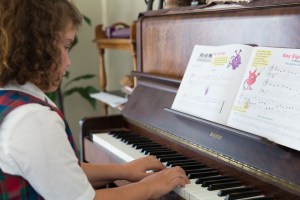
Of course, these ideas all take a bit of effort and some preparation. But think about the amount of effort your child is putting in to master an instrument like the piano. By showing how much you value their involvement in piano, you are laying a strong foundation for years of musical enjoyment, as well as strengthening their self esteem and self image.

So pick one or two of these and give them a try. In a fortnight I will give you another seven ideas, so be sure to check back in.

If you are considering music lessons for your child or for yourself, please contact me to discuss the options. Piano lessons are conducted at my studio in Wallsend, NSW.

What is Involved in Learning the Piano? – Piano Teacher in Wallsend, NSW

It’s a question – and the variants – that is asked quite often… what is involved in learning the piano? What is the commitment? How do we approach the early weeks and months? What will happen? So let’s have a look at what is required for a solid start.

These days there is an increasing trend to treat learning the piano the same way as any other extracurricular activity. On the surface, it’s another activity that ticks the educational box and it is “the done thing”. However, learning an instrument and particularly the piano, is a big commitment, even for the pupils who are just doing it for a bit of fun on the side. In fact, if piano is not practised regularly, pupils usually give up pretty quickly.

The reason for this is simple. Learning an instrument requires the use of three different types of memory:

  • visual;
  • auditory; and
  • kinetic (muscle/movement memory).

Piano lessons Wallsend NSWThe three must all be activated for a child to remember how a specific piece of music works. If a pupil doesn’t play or rarely plays during the week (for instance, just once at the weekend), the kinetic memory will not work and the student will not remember what to do. This usually results in them feeling discouraged. Chances are the lesson will be virtually the same as the previous one, the child will be disappointed and a vicious circle begins. A study determined that a pupil will forget 80% of the piano lesson if he/she does not practise within the following 48 hours. This is consistent with all types of research on learning and memory. A pupil who does not practise daily will not only feel bad, but will not play well at all and get frustrated. Think about how educators map out core lessons at school. In maths for example, if a child learned their times tables just on Monday morning they would struggle to remember them if they aren’t reinforced. Maths lessons are spread out throughout the week for a reason.
As you can see, practising regularly at home is crucial for the child’s enjoyment. It is absolutely necessary because a weekly half hour lesson will never be enough for them to make progress.

On the flip side of this is the good news… you don’t need to practise a lot if you practise every day. For a beginner, 5-10 minutes is fine. Of course this will increase with time, but it’s a good start and gets them into the habit. Children usually respond well to a routine so think about a fixed time such as just before dinner or straight after school. A little bit of patience and dedication is all it takes to both do well and get a real joy from their musical abilities.

Piano teacher Wallsend NSWThere are so many benefits to learning to play an instrument, but they aren’t all going to happen overnight. Because of this, it is not really appropriate to take the, “we’ll try it for a few months and see how it goes” approach. The commitment needs to be made for at least a couple of years. It’s about being realistic about what it takes to gain musical skills.

Besides, you have made a substantial investment in not only time, but tuition fees, music and possibly even an instrument. You want it to be worth it!

It is important to follow your child’s progress and help them to have a bit of fun and focus during their practise sessions. Most teachers write notes on the music and/or provide a practise sheet, so check them out and use those notes as a starting point. I have written a number of blog posts about making practise fun, using different incentives and mixing it up a bit and you can check them out by checking out past blog posts.

Finally, make sure your child brings their piano books to every lesson. While most teachers will have books that can be used during the lesson, no individual notes can be written in them and sent home with the child so the continuity is interrupted and the child will start their next practise session trying to remember what they were told.

Nobody wants piano practise to be a battlefield, so start out as you mean to carry on and establish the routine early. Then everybody can enjoy it.

If you are considering music lessons for your child or for yourself, please contact me to discuss the options. Piano lessons are conducted at my studio in Wallsend, NSW.

Ending Those Piano Practise Wars – Piano Teacher in Wallsend, NSW

I have an old cassette tape that is one of my most treasured possessions. My Dad made it for me many years ago and it contains different performances of mine over the years. It starts way back when I was 4 years old and made up a song (called “Baa, Little Lamb”) on the ukulele and also contains many snippets of me during piano practise. Or to be more precise, me arguing with either Dad or Mum about my piano practise. And all through my practise. I enjoyed playing and I did well, but like every other kid in existence, I didn’t like being told to practise. My sister and I knew that we had to practise twice a day; it was the first thing we did after breakfast and the first thing we did when we arrived home from school. Summer afternoons were hard. So were weekends. We had very strict parents. But we still tried it on.

So, as a teacher, I get it. I know my students don’t like to practise. But I also understand how much they need to. Playing an instrument is a physical skill and requires training of the muscles and fine-motor skills. When parents sign their child up for piano lessons they are not looking for a way to encourage epic battles at home.

How do we bring the desired peace to the home practise world? The wonderful folks at Teach Piano Today have put together five tips (with which I totally agree) to help restore harmony in your household.

Piano Teacher Wallsend NSW

1. LOCATION, LOCATION, LOCATION

It’s true in the real estate world, and it’s also true in the home practise world.  Having your piano in the most advantageous place in your home is of vital importance for successful home practise.

You want to find a balance between shoving the piano in a downstairs corner versus putting it in the centre of your most-used room.  Ideally the piano should be located in a comfortable room, close to where the family is, but away from major distractions.  Your child does not want to feel isolated during practise time – but they also do not want to compete with your food processor and washing machine.

2.  CRAMMING IS NOT THE ANSWER

Nothing stresses a parent out more than helping their child practise when they have 10 minutes before leaving for the piano lesson.  Keep the peace at home by beginning home practise immediately after you return home from their piano lesson.  This is the best time as they will still remember what they covered in their lesson, and the piano books will actually make it to the piano, setting you up for a good start to a week of practise.

Cramming creates feelings of inadequacy in your child as they struggle to perfect what should take 7 days to percolate.  Cramming makes you sweat and wonder why in the world you are paying for these lessons.  Cramming is not the answer.

3.  MISTAKES ARE OKAY

I promise!  It’s the job of your child’s teacher to sort out the mistakes in lesson time. Your job at home is to be the support – to remind them to spend time on the piano, congratulate them on their efforts, revel in the joy that is your child creating music, and show that you value music in your home.

Avoid the following statements and watch peace fall over your home immediately:  “Is that right?  I don’t think that’s right.”… “That’s not how it’s supposed to sound.”… “Are you watching your music?”… “Your sister played that piece and it didn’t sound like that.” … “Wrong note!”… “Try it again.” etc.  Your child will get their back up immediately and the practice wars are sure to ensue.

4.  “BUT MRS JONES SAID!”

How many times has your child shouted a statement similar to this?  “Mrs Jones said I only have to play the first page!”… “Mrs Jones said to play it up here.”… “Mrs Jones said to play it this fast!”… What your child is actually trying to say is “I want to be in charge of my learning.”  So let them.  Whether or not Mrs Jones actually said these things is beside the point.

Resist the urge to argue (and resist the urge to call up Mrs Jones to ask what the heck she is teaching) and trust that your child will sort it out themselves.  This is often a knee-jerk reaction on your child’s part – they so desperately want to be right and in charge and it’s their way of saying “Stay out of this, I’ve got it.”  If you allow them this right to direct their own learning you will help to create a confident piano student.

5.  BE PRESENT

For those parents who do sit with their child during practise sessions, you and your child will enjoy practise time so much more if you, the parent, are not multi-tasking.  Children thrive on one-on-one quality time,  and if this is combined with their piano practise, it is an activity that you will both grow to cherish.

Take away the distractions – the mobile ‘phone, the baby, the dog, the dinner preparation – and focus on just your child.  Soak up the experience of watching your young one learn such a complex skill.  Find a time to practise that isn’t restricted by deadlines.  Just enjoy making music together.  It’s difficult to start a practise war if you are truly “bonding on the bench”.

Piano practise is a commitment. It’s a daily event that can either be gloriously wonderful or horribly stressful.  Keep these five tips in mind when you start out this new practise week and welcome peaceful piano practise into your home with open arms.

If you are considering music lessons for your child or for yourself, please contact me to discuss the options. Piano lessons are conducted at my studio in Wallsend, NSW.

Getting Through the Holidays – Piano Teacher in Wallsend, NSW

Let’s make this school holiday period about the word ‘more‘.

MoreWithout being restricted by the kids’ school routine, you probably have more time. What does this mean for piano practise?
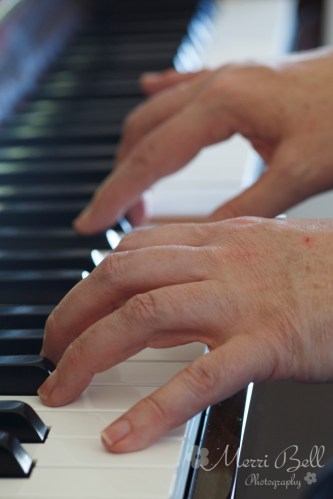
Don’t break the practise routine you have running through term, but use this opportunity to have more fun with practise.

Become more involved.

Create more interaction.

Understand more about what your kids are playing.

How do you do this? By asking them questions. Ask them about what they are playing. Ask them to show you how to do something. For my students, I can supply some flashcards you can use. Following are some examples/suggestions to get you started:

  • What part of this piece do you find the hardest? Can you play just that part for me?
  • Can you play a scale with your eyes closed?
  • Can you show me how to play the last note and then nod at me when it’s time to play it?
  • Can you play this piece in slow motion?
  • Can you follow me conducting you? (Vary the speed and have them follow you).
  • What story do you think this piece is telling?
  • Can you pick one bar and clap the rhythm? I’ll try to copy you.
  • Can you explain to me what this means? (Pointing to any marking on the music).

It doesn’t matter if you don’t know the answers. It is all about getting them to think about what they are doing and sharing it with you. They will love being able to teach you something!

If there is something they can’t answer, have them make a note to ask their teacher, but don’t dwell on it; move on to something else. You want to keep it interactive and fun.

Throw a different question at them every time they practise and you might be surprised how eager they are to share with you. Have fun with it 🙂

If you are considering music lessons for your child or for yourself, please contact me to discuss the options. Piano lessons are conducted at my studio in Wallsend, NSW.

Common Piano Practise Mistakes (Part 2) – Piano Teacher in Wallsend, NSW

“Don’t practice until you get it right. Practice until you can’t get it wrong.”
– Unknown

With our longest holiday period of the year upon us here in Australia, students will have six weeks in which they will be practising with no input or guidance from their teachers. That’s a long time to be getting nowhere if they aren’t practising effectively and efficiently. Two weeks ago I posted about some common mistakes make by students when practising and how to overcome these issues.

Following are some more tips that will help you practise effectively not just over the summer holidays, but at any time:

Using incorrect fingering. Sometimes the fingering noted on the music may seem either unimportant or too difficult, but the truth is it is always there for a reason. It is usually moving your hand to where it needs to be for optimum movement (and minimal confusion). Being consistent with fingering also calls upon your muscle memory, allowing you to learn the piece with more stability.

Practising too fast. I know I have mentioned this many times before, but it is so important to slow down and take your time. It can be frustrating when you know how the piece sounds and you just want to play it at speed so the familiar sound and what you are playing are closer. But playing too fast doesn’t allow you to really pay attention to what you’re playing or note the areas that need additional work. It’s much easier to increase speed once the piece is correct than it is to have to slow down later and try to ‘unlearn’ mistakes.

Piano teacher Wallsend NSWHaving your piano in an out-of-the-way location. Having your piano or keyboard tucked away in a spare room or an area of the house not regularly accessed doesn’t encourage regular practise. Out of sight, out of mind! Have your piano in a prominent position in the house so it acts as a constant reminder.

Not counting out loud. Even though I have been playing for over 40 years, I still find counting out loud is the easiest way to get my mind around a complicated new passage. It is particularly crucial for beginners and works excellently in conjunction with the point above about slowing down. Counting out loud helps develop a sense of rhythm; the physical act of counting makes the rhythm more dominant and the hands tend to follow.

Watching your hands instead of the music. When you watch your hands instead of the music, you tend to learn the piece with mistakes; playing by ear and using memory take over from reading what the music is asking you to play. When you do need to look down to your hands, try to just avert your eyes rather than move your head, or it is more difficult to re-find your place on the music when you lift your (moved) head back up.

Practising “in bulk”. Shorter, regular practise sessions are far more effective than one very long one. Once you are aware you are becoming mentally fatigued, you should stop practise and come back to it when you feel more alert.


If you are considering music lessons for your child or for yourself, please contact me to discuss the options. Piano lessons are conducted at my studio in Wallsend, NSW or mobile lessons are available in the eastern suburbs of Lake Macquarie.