
“How soon will she be able to sit her first exam?” is a question often posed by new or prospective student parents, often with a memory of their own days learning the piano.
When I was a kid, it was normal to start lessons at the start of the year after turning seven. We concentrated on one extracurricular activity (or only a couple) and we could practise every day. In the middle of the following year, we were usually ready to sit the Preliminary grade AMEB exam.
But these days the answer to the ‘when’ question is as uncertain as the length of the proverbial piece of string and there are a number of reasons why.

- The AMEB Preliminary exam has been growing substantially and steadily more difficult. Pieces that appeared in my old First Grade books are now more likely to be found in the Preliminary repertoire. It was rare to venture beyond the basic five finger position and both key and time signatures were beginner level. In comparison, one of the pieces in the current Preliminary syllabus has interchanging compound and simple time signatures and two different pentatonic key signatures, as well as extending to both extremes of the keyboard.
- Kids these days have quite heavily-scheduled lives. They often have a list of extra-curricular activities that take up so much time, there is little time left for home practise. If they can’t practise effectively, they won’t improve at the rate that may be expected. Just turning up to lessons isn’t going to do the job. A student who can manage 90 minutes a week of quality practise will take double the time to progress as a student who can manage 3 hours (and this commitment to practise is pretty much out of the control of the piano teacher).
- Students are often starting lessons at a younger age. While I still prefer to not start them until around seven, many kids are starting as young as 4 and 5. This is a major factor in their exam-readiness. While there are many benefits to starting kids in music lessons earlier, without those language and maths basics behind them, it takes longer for them to learn concepts and many weeks of reinforcement activities are often required for each note or concept. Looking at the practise aspect, younger children’s attention spans are shorter and it can prove counterproductive to insist they sit at the piano for a specific amount of time. They also benefit greatly from having a parent sit with them and guide them through their practise, which becomes difficult when both parents need to work.
- Both parents working often means kids aren’t coming straight home after school. Afternoons spent at facilities such as OOSH offer no opportunity for scheduled practise time and the precious few hours left at home are rightly dedicated to family time.
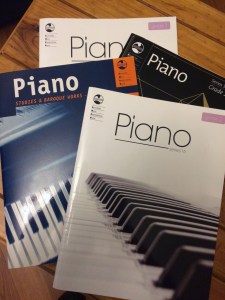 The first point above makes the combination of issues somewhat specific to Australia, as the Australian Music Examination Board (AMEB) is the dominant player in providing instrumental assessments in Australia only, but the problem of less available practise time and younger beginners is lamented by teachers worldwide, whether in relation to exams or just general progress.
We can no longer expect piano students to follow the same progression as all the generations before them. Whereas once upon a time it was not uncommon for a beginner aged seven to spend eighteen months acquiring the basics and practising 20 – 30 minutes every day of the week to be ready to sit for their Preliminary examination (which were much easier), these days it is a rare student who is ready to be entered for this first examination within any less than two-and-a-half to three years of tuition.
If you are considering music lessons for your child or for yourself, please contact me to discuss the options. Piano lessons are conducted at my studio in Wallsend, NSW.
 Following are some tips that can help you make the maximise the effectiveness of your practise time:
 4. Schedule your practise sessions – While this seems self-explanatory, this technique will only work well when in conjunction with the tip above – if you schedule in time, you must be prepared to give that time your full concentration. For some, the best time may be first thing in the morning when the mind is fresh (and you will feel accomplished at having started your day by completing a major task) while others may need to wait until the kids are in bed and the household jobs completed.
 7. Keep a practise journal – A practise journal is a log of your practice sessions, including what you practise and for how long. It can be a notebook, a Word document, a spreadsheet or whatever works for you. At the end of each practise session, write down which pieces you worked on and how long you spent on each one. This can serve to force your mind to focus and may also help with planning future practise goals (in fact, it can be an interesting exercise to compare it to your original goals).
 9. Study away from the piano – This has been covered in more detail previously
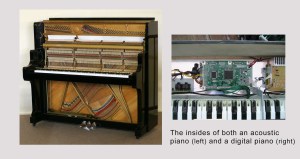 As good as digital pianos have become in simulating the sound and feel of an acoustic piano, there is nothing that can totally match the real thing. The majority of electronic instruments lack the tone and touch of an acoustic piano, as well as the feel and the ability to convey subtle emotion and feeling. An acoustic piano has strings and hammers, while a digital piano has none. Having actual strings means that there are thousands of things in an acoustic piano (such as sympathetically vibrating strings) that are difficult to reproduce convincingly on a digital piano.
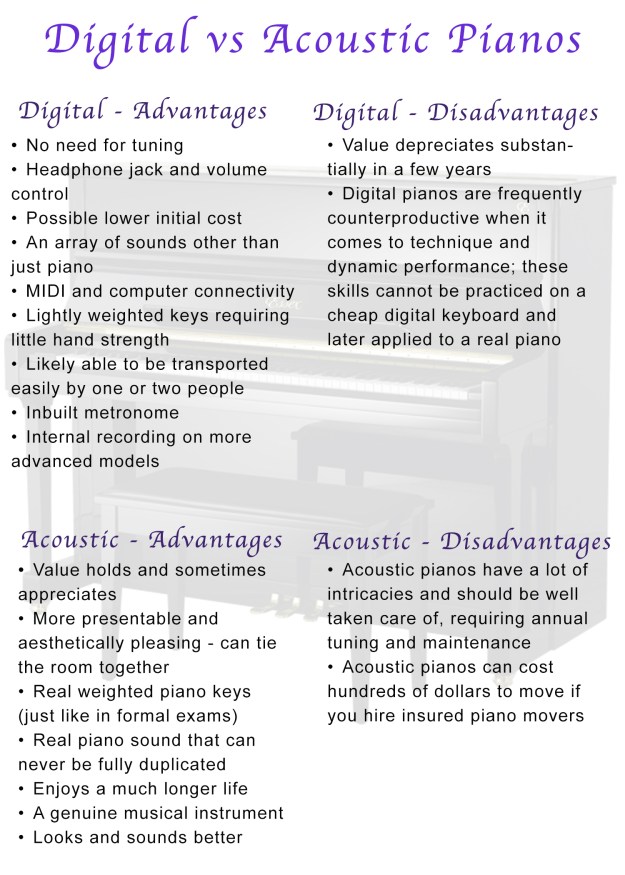 Whichever way you go, if the piano is incapable of delivering a good response to touch, the student will not improve.
 A couple of weeks ago, I posted –
  2. Surprise Sheet Music Shopping – When you collect your child from school, head off on a surprise trip to your local music shop and offer then the opportunity to choose any piece of sheet music or music book they like. Spend some time with them browsing through the options and finding just the right thing to take home. (Music stores are a treasure trove and can be overwhelming on the first visit, so ask the sales assistant to point you in the right direction for your child’s level).
 4. Post Office Package – Create a little package of special treats and a note about your pride in your child’s piano accomplishments. Mail it to your child and let them discover it in the mail box.
 As mentioned in the
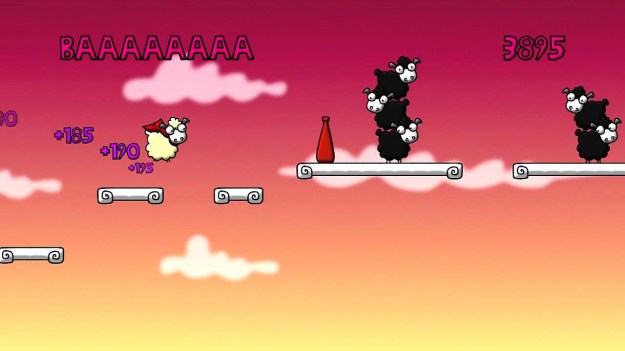 The sheep can jump at either one, two or four beats and can also jump two different height levels. An obstacle on the path – such as a tower of balancing sheep – requires a swipe to knock down. This means, as with most things to do with playing music, your brain is concentrating on multiple things at the same time. The picture above shows one beat and two beat lengths, a double jump and single jumps plus swipes. All of that would take less than five seconds to execute. Plus it all has to be done strictly in time with the music!
 The graphics are cute and the music is catchy. At first the music can be annoying – especially when you aren’t being successful – but all of a sudden you will find it’s an integral part of the mood and the fun.
 2. Piano Pancake Surprise – On a weekend morning when the routine is more relaxed and you are still all in your pyjamas, surprise your child with ‘piano pancakes’ topped with chocolate chip crotchets (or quavers, or rests or whatever symbol they know that takes your fancy). For each pancake on the plate, have your child perform a piece for the family while you all watch.
 5. Tech Free Practise Time – Whenever your child sits down to practise, make the household tech free. Turn off the television, mobile phones, computers… everything. Let the home be filled with the music they are creating and allow yourself to be fully present. This also shows your child that you value what they are doing and how hard they are working.
 7. Host a Piano Picnic – Invite the whole family to a ‘Piano Picnic Dinner’. Spread a blanket on the floor near the piano and serve some special picnic fare – cheese and crackers, tea and biscuits. In between bites, have your child provide the dinnertime entertainment. You may even like to make it a fancy occasion, drinking your tea with your pinky raised and speaking in a dignified manner… “Oh, daaahling, that was simply splendid… just magnificent playing, daaahling!” It will give them a good giggle as well as making them feel proud.


 In mid-June, an assortment of students from our little piano studio in Wallsend sat for practical exams with Australia’s premier examining body, AMEB (Australian Music Examinations Board).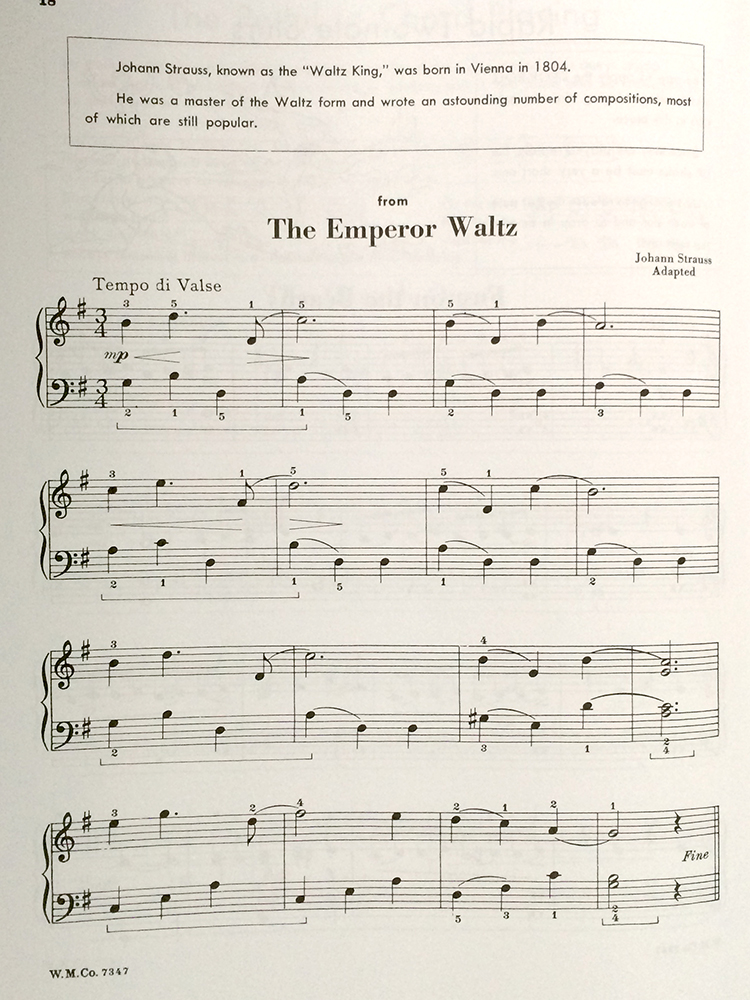

 These days we have so much technology at our disposal and it is always tempting to look for tools that are complex and multi-use because we feel the more they offer, the more useful they should be. But sometimes we are just making things harder for ourselves. It’s like trying to work out all the complexities of a smart phone, when all we really want to do is make a telephone call.
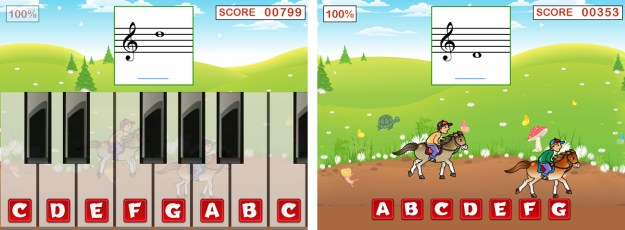
 The difficulty can be increased by adding more notes and/or speeding up the race. The speed is determined by whether you choose to walk, trot, cantor or gallop during your race. Before you know it, you’re an expert at naming the notes of the treble clef, the bass clef, or both.
 merri bell music