Tag Archives: piano lessons Newcastle NSW

Playing vs Practising… A How-to Guide – Piano Teacher in Wallsend, NSW

“Every difficulty slurred over will be a ghost to disturb your repose later on.”           
Frédéric Chopin (18101849) Polish Composer and Pianist

Practising the piano and playing the piano are two different things. If a student plays through all their pieces each day they may well find at the end of the week there is no discernable improvement, even though they have spent hours at the piano.

So what is the difference between playing and practising? Playing is just that – playing the piece through over and over and hoping it improves. Practise involves breaking down the song and working on each weak area as a stand-alone section.

The phrase I probably use most often with my students is, “slow it down” as that is always the first approach to a troublesome section. When you slow down you can better pinpoint where the problem is. It can be difficult to do when you know how the piece sounds; your brain will push you to speed it up and it is easy to lose concentration, but the benefits are worth the effort.
Piano teacher in Wallsend NSW

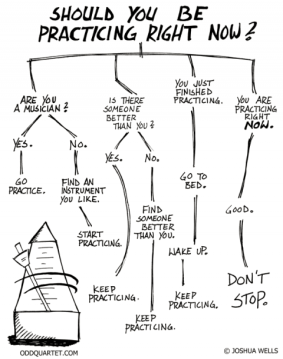
A tongue-in-cheek view of practising

Isolate the problem area and separate the hands, playing each hand on its own until you are more confident with the part each hand is playing. Really think about what you are asking your hands and fingers to do. If there is a run or passage that follows the pattern of a scale or arpeggio, it can help to play that technical exercise a few times first. Then slowly put the two hands back together and work to gradually increase your pace.

While slowing down and/or separating hands, still aim to maintain all the expression (dynamics, tempo etc) required.

Once you feel better about that section, put it back into the whole piece and see how it sounds and feels. If it is improved, move on to the next problem section and go through the same process. Using this method, you will eventually play the piece fluently and with pride in what you have achieved.

If you are considering music lessons for your child or for yourself, please contact me to discuss the options. Piano lessons are conducted at my studio in Wallsend, NSW or mobile lessons are available in the eastern suburbs of Lake Macquarie.

Scales… Pain or Gain? – Piano Teacher in Wallsend, NSW

Ah, scales. A word that causes many musicians to sigh with exasperation or boredom. Personally, I always welcomed them, with their structure and consistency. Love them or hate them, scales are a big part of practise life for any musician (instrumentalist or vocalist).

A scale is “…any set of musical notes ordered by fundamental frequency or pitch. A scale ordered by increasing pitch is an ascending scale, while descending scales are ordered by decreasing pitch.” (Wikipedia) They are the backbone of all types of music we play.

While a variety of scale types exist, each type is defined by its characteristic interval pattern. It is the constant repetition of these patterns that causes scales to be such a large part of learning to play an instrument – including the voice – because they help build muscle memory. By playing scales, your fingers will learn to easily go to the correct notes in the scale you are playing, so when you play a piece of music, your fingers will move more automatically to the correct notes.

Piano teacher Wallsend NSWWhy practice scales?

  1. Scale practice plays an essential part in developing a pianist’s skills.
  2. They improve keyboard fluency.
  3. Scales develop posture, hand position and coordination, as well as balance between the hands and movement of the arm.
  4. Practising scales speeds up the learning of new pieces (muscle memory).
  5. They develop evenness of line and quality of tone.
  6. Scale playing builds aural awareness.

For students preparing for an exam, the examiner will be looking for:

  • A positive sense of rhythm without under-accentuation;
  • Even, firm tone and a musical curve;
  • Good legato;
  • Accurate and fluent realisation of the different types of scales, arpeggios and broken chords; and
  • Convincing negotiation of technical challenges such as smooth passage of thumb and hand coordination.

So the lesson here is we need to learn to love scales. They are incredibly beneficial physically and the basis of all we do as musicians. All practise sessions should start with a variety of scales, even if their only purpose is to warm up the fingers and hands (although we know they do much more than that). To break up the repetitive nature of practising scales every day, apps such as Blitz Book’s ‘Scale Blitzer’ can add a bit of fun.

If you are considering music lessons for your child or for yourself, please contact me to discuss the options. Piano lessons are conducted at my studio in Wallsend, NSW or mobile lessons are available in the eastern suburbs of Lake Macquarie.

Ready for Term 4, 2014 – Piano Teacher in Wallsend, NSW

We are now halfway through the school holidays and I trust all my wonderful school-aged students are enjoying their time away from school and piano lessons. Lots of fun, laughter and exploring. I hope there is still a bit of practising happening, though! Of course, my adult students and I are still plugging away through the holidays.

The dates for Term 4 are Monday 06 October – Saturday 20 December, making this a term of eleven weeks. Full term fees (including discount) are as follows:

30 minute lessons – $313.50

45 minute lessons – $470.25

It’s a bit scary to think about how close we are to Christmas, but a few kids have already been asking about Christmas music. I have ordered some new Christmas music at a variety of levels so the kids can have some fun. Of course, the adult students are welcome to play them as well 🙂

Piano teacher Wallsend NSW


There’s an App for That! – Piano Teacher in Wallsend, NSW

School holidays are upon us again and I’m being realistic. I know it’s unlikely most of my students will do any piano practise during the holidays. But that doesn’t mean they can’t be still keeping their other skills up-to-date.

Most of them have iPads and/or iPods and there are a wealth of apps they can use to help reinforce note recognition, rhythms and theory, as well as co-ordination. Best of all, they will think they are just playing but we adults know they are still learning while having fun.

Many of the good quality apps have a small cost attached, but usually have a sample/lite version for free so you can check it out first.

Following is a small selection of apps I use regularly:

Rhythm Cat
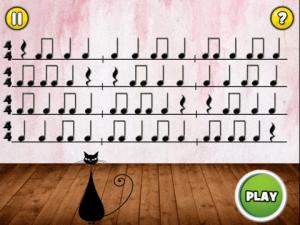
Piano teacher Wallsend Newcastle NSWPiano teacher Wallsend Newcastle NSWRhythm Cat teaches and reinforces the most commonly-used musical rhythm notation. The free ‘Lite’ version has 15 levels while the ‘Pro’ version works up to following three different colours in each rhythm, encouraging co-ordination of both hands.



Piano teacher Wallsend Newcastle NSWThe ‘Cat’ family also includes ‘Treble Cat’ and ‘Bass Cat’. I don’t tend to use Bass Cat with my beginners because it starts in a different octave, but Treble Cat is better suited. These games involve recognising the notes from amongst a group of notes, not just on their own. The notes also move slowly, giving you plenty of time to recognise the correct notes.


NoteWorks
Piano teacher Wallsend Newcastle NSWA basic note recognition app, NoteWorks is customisable for difficulty, including clef/s and range of notes. The interface and sound effects are fun for younger students, but the app still moves quickly enough to be challenging for older students and adults.

Part of the customisation is being able to choose whether you simply name the note, or name it plus locate it on the keyboard.

Piano Teacher Wallsend Newcastle NSW


Magic Piano
Piano teacher Wallsend Newcastle NSW

While this may seem a strange selection because it involves neither note recognition or a keyboard, I love it because it not only encourages eye-hand co-ordination and developing fine motor skills, but also exposes the students to a range of music they might not otherwise hear. Music education apps don’t always need to be obviously teaching 🙂

This addictive app also helps to develop a good sense of rhythm.

Piano teacher Wallsend Newcastle NSW


My Note Games

Piano teacher Wallsend Newcastle NSW

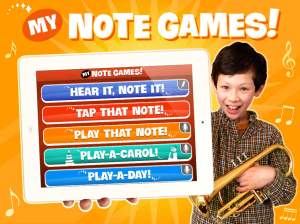
This app has a suite of different games within it and caters to a range of abilities. Also, some games use the microphone to hear what you are playing on your own piano (which the kids love), while others use just the device.


Piano teacher Wallsend Newcastle NSWTap that Note uses the device to identify notes, while Play that Note requires you to play to specified note on the piano (or whatever instrument you tell the app you are using). Play-a-day is a great sight reading exercise for intermediate students. As the name suggests, Hear It, Note It – also available as a standalone game – involves listening to what is played and notating it and has three difficulty levels within. Activities include tasks such as adding accidentals to correct a scale or completing rhythms with notes, rests and bar lines.


Tenuto

Piano teacher Wallsend Newcastle NSW

Piano teacher Wallsend Newcastle NSWWhile it does contain basic note recognition, Tenuto is really suited to more advanced students, as the majority of activities are more complex.



 Beat the Melody

Piano teacher Wallsend Newcastle NSW

The concept of this is quite simple… if the notes are going up, tap the screen more to the right; if the notes are descending, tap the screen to the left. It is designed to test your aural ability.

However, these are not simple melodies. If it’s not a tune you already know, the songs can be difficult as some can have up to 50 or 60 notes (or more!). Consequently, this is not for beginners. It’s a great aural tester for experienced musicians, though.

Piano teacher Wallsend Newcastle NSW

Enjoy your holidays!

If you are considering music lessons for your child or for yourself, please contact me to discuss the options. Piano lessons are conducted at my studio in Wallsend, NSW or mobile lessons are available in the eastern suburbs of Lake Macquarie.

It’s Just a Sibling Kinda Feeling – Piano Teacher in Wallsend, NSW

“Siblings are the people we practice on, the people who teach us about fairness and cooperation and kindness and caring – quite often the hard way”
– Pamela Dugdale

It’s a good feeling when the sibling of a current student starts lessons; it means I must be doing something right!

As the younger of two sisters, I never knew what it was like to not learn piano while my older sister was also learning. We had lessons on the same days, we practised one after the other and we worked towards exams at the same time. We played duets together, we challenged each other, we created, transposed and harmonised together and we laughed a great deal.

I realise that for her as the older sister, it was probably a different scenario. While I idolised my big sister and wanted to do whatever she did, she probably didn’t appreciate a little interloper in her arena.

As far as lessons went, our wonderful teacher, Sr Marie Therese realised how different we were in style, technique and temperament. Also, our mother requested I didn’t play too many of the same pieces as my sister, even though I was three years behind her. (When you are practicing twice a day, exam pieces soon become extremely repetitive for the poor listeners!). While our carefully-chosen early method book pieces were the same, once we moved into grade work Sister catered for our different styles. My sister usually played the intricate, technical pieces, while I played the more emotive works.

Piano Teacher Wallsend Newcastle NSWIn our late teens to early adulthood, these differences became our strengths. We worked together really well because we complemented each other and didn’t suffer from competition. Even when we sang, I sang the soprano to her alto. When she moved on to singing lessons, I accompanied all her practising. The picture on the right is a famous artwork that was on the cover of a card she once gave me.

These memories hold important lessons that I bring into teaching siblings – respect and encourage their individuality, make no comparisons and ensure enough variety in materials used to save the parents’ sanity!

Sibling rivalry/competition – whether blatant or subtle – can be a problem and for this reason it is usually not advisable to start siblings at the same time. However, the following positives usually outweigh the competitive aspect:

  • Both/all kids need to practise daily, so both are on similar schedules
  • The siblings can share a common interest
  • Older siblings can help the younger ones
  • Younger siblings can be inspired by older brothers and/or sisters
  • They can all have fun playing duets – even if they play different instruments
  • The younger sibling has seen the work involved by watching the older child, so goes into lessons with a clearer expectation of what is required (eg they know they need to practise)

The main thing is to remember each child is different, with different abilities. I will always work with the parents to ensure this individuality is respected.

If you are considering music lessons for your child or for yourself, please contact me to discuss the options. Piano lessons are conducted at my studio in Wallsend, NSW or mobile lessons are available in the eastern suburbs of Lake Macquarie.

Piano teacher Wallsend Newcastle NSW

The Labèque sisters, Katia (born 11 March 1950) and Marielle (born 6 March 1952), are an internationally known French piano duo.


Encouraging More Practise – Piano Teacher in Wallsend, NSW

Establishing a practising routine can be hard work! Playing the piano is not easy and your kids will try all sorts of excuses to get out of practising. It is important to set practise time into their general routine so it has a place and is not just something that is done if they have leftover time.

Following are some tips to encourage more practise:

  • Never underestimate a reward system. Use whatever works for your child; it could be anything from extra iPad time to an exemption from a household chore. Their reward may even be a favourite meal.
  • Schedule practise time to happen before something they can relax with – free play time, for example. Of course, if you suspect this may lead them to rush through practise with no concentration, try another tactic.
  • Give your child something exciting to work for. Anticipation works wonders! Set a practise goal, wrap a little gift and pop it somewhere they can see it. Only when they reach the practise goal are they able to open their gift.
  • Connect their practise session with another activity that occurs every day. Perhaps your child could practise straight after breakfast or maybe before they start their homework. Whatever works for you.
  • Remember to reward yourself. This is your journey as well, so find something fun with which to reward yourself when you are successful at getting your kids to practise.

Piano Teacher Wallsend Newcastle NSW


A great little resource for practising tips for parents is the e-book “101 Piano Practice Tips”, which is available through Amazon.


If you are considering music lessons for your child or for yourself, please contact me to discuss the options. Piano lessons are conducted at my studio in Wallsend, NSW or mobile lessons are available in the eastern suburbs of Lake Macquarie.

Want to Reward Your Brain? Listen to New Music – Piano Teacher, Wallsend, NSW

Recently I attempted to have an MRI. I say ‘attempted’ because I failed. Miserably. Previously-unrealised claustrophobia swept in and took over… big time. Crying, sweating, shaking and stricken with headache and nausea, I was pretty quickly pulled out of the tunnel of terror and sent on my way.

But while I may now be overcome with unpleasant sensations at the very thought of an MRI (or any closed space) the technology is increasingly being used in research with very interesting results.

We all know it is impossible to listen to music and not be moved. What music moves us, how much and why are mysteries that have for many years intrigued both musicians and scientists. Last year a study* was undertaken at the Montreal Neurological Institute at McGill University in Canada to find out some of these answers.

Piano teacher Wallsend Newcastle NSWWhile most previous studies had used only strongly-emotive music, this study had participants bring in music they preferred. This ranged from classical music through to techno, country, film soundtracks and heavy metal. The participants were then studied using MRI while listening to 60 different excerpts of new music, based on their musical taste. They also had the option to ‘buy’ a song in a mock online store, based on the 30-second samples.
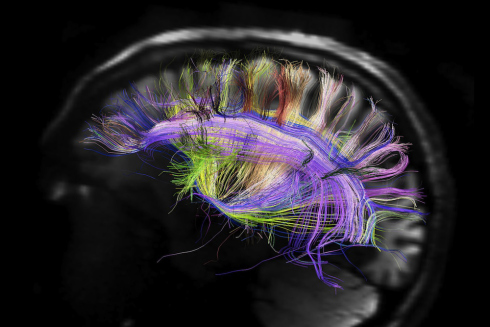
What was discovered was that a particular part of the brain becomes active when we hear a piece of music for the first time. This part of the brain is the nucleus accumbens, a zone that is operated by the chemical dopamine, which plays a major role in reward-motivated behaviour.

One of the researchers, Dr Valorie Salimpoor, said, “What’s cool is that you’re anticipating and getting excited over something entirely abstract – and that’s the next sound that is coming up.” The more a participant liked the music they were hearing, the more stimulated the ‘reward region’ of the brain became.

Because our brains are so well-suited to using patterns to predict what will happen next, we are constantly making predictions. Even if the piece of music we are hearing is new, our brains are predicting – based on past musical experiences – how it will unfold. If we enjoy the music more than predicted, the nucleus accumbens (partnering with pattern recognition and high-order thinking centres) fires off with delight.

“What makes music so emotionally powerful is the creation of expectations. Activity in the nucleus accumbens is an indicator that expectations were met or surpassed,” Dr Sapimpoor said.

So if you want to get that dopamine pumping and reward your brain, treat yourself to some new music. Launch your Spotify app or go through some recommendations in iTunes. You never know what joys you may discover.

And I promise you won’t have to visit an MRI machine to feel the benefits 🙂

Piano teacher Wallsend Newcastle NSW

Credit: Image courtesy of MGH-UCLA Human Connectome Project.

If you are considering music lessons for your child or for yourself, please contact me to discuss the options. Piano lessons are conducted at my studio in Wallsend, NSW or mobile lessons are available in the eastern suburbs of Lake Macquarie.

 
* The study is published in the journal, ‘Science”.
Salimpoor VN, Benovoy M, Larcher K, Dagher A, & Zatorre RJ (2011). Anatomically distinct dopamine release during anticipation and experience of peak emotion to music. Nature neuroscience, 14 (2), 257-262 PMID: 21217764

Helping Your Child Achieve Good, Quality Practise – Piano Teacher in Wallsend, NSW

Let’s assume your child has made a commitment to learning to play the piano and has ceased to see you as the ogre in the household because you are constantly hounding him/her to practise.  “That’s a fantasy world!” I hear you exclaim. Well, it may never become quite that easy, but there are some things you can do to ensure the practise sessions they do get through are as effective as possible.

Overall I think the most important thing you can do to show your child you are committed to their learning and progress, is to schedule their practise time in to your weekly schedule. It should be included in their regular tasks, just like school homework (and also ensures “too much homework” doesn’t become an excuse for not practising).

Try some of the following tips and see what works best for you:

  • Encourage your child to practise most days (with a couple of ‘rest days’ interspersed in between). Consistency is so important and regular, shorter practise sessions are far more effective than one or two long practises. The more they practise, the more they will improve and this will increase their enjoyment of playing the piano.
  • This may seem obvious, but encourage your child to really focus when they are practising. Chances are their mind is more engaged in what they are wanting to do next and if they are rushing to finish, they will make more mistakes. This will only result in increased frustration and no improvement in their playing. A short practise brimming with focus is far more effective than a long, unfocussed session.
  • Encourage your kids to play the pieces they find difficult. If they are becoming frustrated, have them play with hands separately and become comfortable with that before joining their hands back together.
  • Piano teacher Wallsend Newcastle NSWLet them write on their music (in pencil, of course). While you don’t want them writing in every single note name, marking up spots where they are having trouble every time may help. It might be the note names of a tricky passage or an unusual timing count that trips them up. Having a little help written in may increase their confidence with the whole piece.
  • Encourage slow playing, particularly of new songs. Most of us – not just the kids – have a tendency to want to play quickly, particularly once we know how the piece should sound. What we risk doing is ‘practising-in’ mistakes and learning the piece incorrectly. It is also frustrating for both there person playing and the person listening! Playing slowly also helps increase control. Once they are more familiar with the piece, playing it faster will come naturally.
  • Count out loud. Nice and simple. If the timing is tripping them up, counting out loud is far more effective than counting silently in their heads; it makes the count more dominant.

If you are considering music lessons for your child or for yourself, please contact me to discuss the options. Piano lessons are conducted at my studio in Wallsend, NSW or mobile lessons are available in the eastern suburbs of Lake Macquarie.