Back in the day when Australia had three school terms per year, it meant we were on school holidays shortly before we were due to sit our yearly piano exams. One year we were lucky enough to travel to America over the holidays and I remember thinking my mother was crazy for making us pack our music. We knew it was pretty unlikely we would find a piano anywhere to play! But she knew something we didn’t at the time… there’s are a lot you can do that will be useful, even without a piano. It’s about keeping the details of the music fresh in your mind.
SCORE STUDY
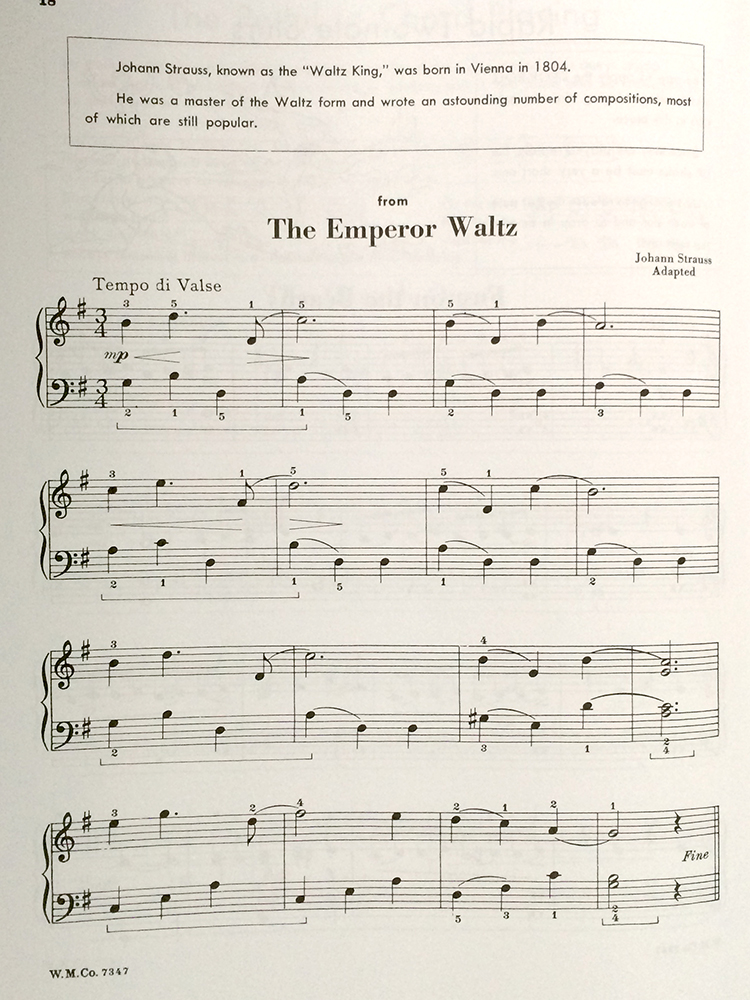 For younger students, setting up a scavenger hunt is a great tool. Any teacher would be happy to help you out with devising a list of items to find, such as “How many dynamic markings do you see? What kinds of articulation markings are found and how many of each? On what note does your piece start? While these questions may seem simple, they help to create important connections in the student’s brain that will transfer nicely once he’s back at the keys.
For more advanced students, it can be a challenge to ask them to write – from memory – a passage from one of their pieces. This should include all articulation markings and dynamics. The ability to take what they can play and actually write it out in detail is challenging, but it allows them to see how much they are relying on muscle memory and auto pilot and how they may not be fully aware of the details of the score. While this is certainly challenging for advanced students, the technique can also be used for beginners.
MENTAL PRACTICE
Mental practice is a simple concept. You “play” through your piece in your mind, hearing it as you would if you were actually playing it. But for a young child, mental practice is likely to go a little something like this…
“lah lah lah… I wonder what Ted is doing now… Ho hum… I’m hungry… hmmm… Georgie said I could borrow her skateboard… lah lah lah… uh oh…I’m lost.”
Kids are naturally active and their brains work a mile a minute. Asking them to focus on a fairly involved mental task that is hard to evaluate can be tricky. There are tools to help improve mental practice and we’ll look at those in more detail in a later post. The good thing about mental practice is that is can be done anywhere, at any time – in the car, brushing teeth, lying in bed etc. The goal is to have students be able to mentally hear both treble and bass clef (together) from beginning to end with all of the articulation, phrasing, dynamics etc. that are on the page.
VISUALISATION AND TAP PRACTICE

Picture courtesy of brainpickings.org
Children spend so much time in an imaginary world, so they usually find visualising much easier than adults do. Visualisation is simply having the student – on a flat surface away from the piano – close their eyes while imagining their hands are on the keyboard. They then play through their piece on their imaginary keyboard. For younger or beginner students, you can use the following procedure to help them:
- Have your student place their hands on the table top with their eyes closed, and imagine they are about to begin playing a current piece.
- Ask questions to ensure they can really see their visualised keyboard and understand where their fingers are in relation to it, such as –
“If your hands were on the keys, what is the black key that is closest to your left hand thumb?”
“Can you think about the very first note(s) in your piece and wiggle the finger(s) you use to play it?”
“Can you put your hands down in your lap and then bring them back up to the very same position?”
They tap their way through their piece, playing exactly as they would on the keys, but with no sound involved. They still play hands together, with phrasing, dynamics and articulations as they would on the keys, but it is all done on a table top.
PUTTING IT ALL TOGETHER
Combining tap practice with visualisation, mental practice and score study is very effective and stops tap practice being just random finger tapping. Give it a try not just over the holidays, but any time throughout the term as the skills that are being developed with these techniques will serve you very well in your musical journey.
So what happened when I took my music all the way to America? Well, I did study it while I was there, but didn’t help the panic when my luggage went missing on the trip home… with my music in it! Luckily music and musician were soon reunited.
If you are considering music lessons for your child or for yourself, please contact me to discuss the options. Piano lessons are conducted at my studio in Wallsend, NSW.
 These days we have so much technology at our disposal and it is always tempting to look for tools that are complex and multi-use because we feel the more they offer, the more useful they should be. But sometimes we are just making things harder for ourselves. It’s like trying to work out all the complexities of a smart phone, when all we really want to do is make a telephone call.
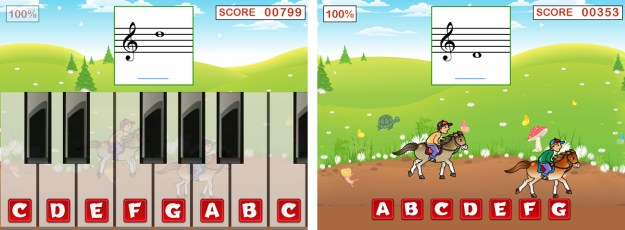
 The difficulty can be increased by adding more notes and/or speeding up the race. The speed is determined by whether you choose to walk, trot, cantor or gallop during your race. Before you know it, you’re an expert at naming the notes of the treble clef, the bass clef, or both.
 The three must all be activated for a child to remember how a specific piece of music works. If a pupil doesn’t play or rarely plays during the week (for instance, just once at the weekend), the kinetic memory will not work and the student will not remember what to do. This usually results in them feeling discouraged. Chances are the lesson will be virtually the same as the previous one, the child will be disappointed and a vicious circle begins. A study determined that a pupil will forget 80% of the piano lesson if he/she does not practise within the following 48 hours. This is consistent with all types of research on learning and memory. A pupil who does not practise daily will not only feel bad, but will not play well at all and get frustrated. Think about how educators map out core lessons at school. In maths for example, if a child learned their times tables just on Monday morning they would struggle to remember them if they aren’t reinforced. Maths lessons are spread out throughout the week for a reason.
 There are so many


 Don’t slack off on your practise and then cram it all in during the week before.


 I have posted before about

 Without being restricted by the kids’ school routine, you probably have more time. What does this mean for piano practise?
 merri bell music