There has been some singing happening in the studio lately.
Music is a language. It contains phrases, just the same as the spoken – or sung – word. How we deliver these phrases, how we emphasise particular musical words and sentences, delivers a certain meaning to our audience. When we are trying to learn a piece, it can be difficult to look beyond the notes on the page. Singing the music allows us to feel it moving forward, with all its twists and turns and emotion, and to develop an understanding of what we are aiming to ultimately achieve when playing a piece.
 There are various benefits for singing during piano lessons:
- When singing along with what we are playing, we learn to match the pitch of our voices with the piano, which is a great ear-training tool for ascertaining both pitch and intervals.
- Being aware of where we need to breathe when singing helps to understand where our hands also need to take a little breath. Phrase lines are written into music to tell us when to take this minute break (an upward lift), but it can feel mechanical without understanding the feeling behind the phrasing.
- Perhaps most importantly, singing is great for allowing us to feel the emotion of a piece (particularly if it has lyrics). We are able to tell the story with more musicality and expression, moving it forward with purpose.
“By exploring the voice, we teach important musical ideas and encourage piano students to achieve a higher level of musicianship”.
Jennifer Merry, Keyboard Companion, Spring 2005
 It is certainly more difficult to encourage students to sing than it is to get them to play, as singing seems to involve displaying a little more of ourselves, but it is this inner emotion we are trying to release. This is what we need in our playing. Once the students open up and let go, understanding how the music feels, they can really put some energy and feeling into what they’re playing.
Sight singing is more formal and this is being introduced to the older kids. Used as a forerunner to playing the piece, it helps them to not only develop aural skills and sight reading skills, but learn to get a feel for a piece from sight. Being able to pitch the piece from sight and develop a good idea of how it will sound before starting to play is a great benefit.
So if your child arrives home from a lesson and says, “Today we sang,” then you’ll know they were learning to develop their musical expression.
If you are considering music lessons for your child or for yourself, please contact me to discuss the options. Piano lessons are conducted at my studio in Wallsend, NSW.
 Chords! All the popular music that kids like to play revolves around chords. Chords are based on scales. If the scales flow freely from your fingers and the construction is understood, chords can come easily. Improvise with chords – with or without a melody line – and you can follow a lead sheet and play a vast range of songs.
 Why practice scales?

 You understand the mechanics of running, but does the information in your brain translate to your muscles so they know how to behave? No. The muscles need to learn those new skills.
 A similar problem occurs when – for a variety of reasons – students want to rush through levels of exams. This often means learning only the minimum number of pieces to get through, and the overall musicianship is sacrificed.
 Don’t slack off on your practise and then cram it all in during the week before. Playing piano is a (cumulative) physical skill as well as mental; you wouldn’t run a marathon if you had only been training for a week.
 Not just between your child and their instrument, but also between your child and music in general. There have been lots of studies proving the benefits of music to our brains, but these benefits won’t occur by just turning up to a 30-minute lesson once a week. They will also learn more about their instrument – how it feels, how it sounds, what it can do – and will become more attuned to how they can control what sound it can produce.
 To play an instrument, your child’s brain is processing a great number of details simultaneously, combining rhythm, pitch, technique, body positioning, fine motor skills, dynamics, texture, tonal shading and more. The synapses being developed in the brain of a musician are unique.
 Piano skills don’t instantly appear, but grow over time. Having a goal towards which they can steadily progress gives your child the opportunity to understand the concept of steady progress and delayed gratification.
 When they play sport, they accept they will have to go to training sessions. Many of them probably practise their ball skills at home. But they don’t call it practise.
 These days there are coaches for everything – fitness coaches, vocal coaches, sport coaches, diet coaches, life coaches, drama coaches, executive coaches, dance coaches. The list goes on and on.
 Try it out with your kids. Change the language. See if they are happier to rehearse or to train or even to prepare for their next coaching session. Modify the vocabulary and find what works for them. Whether we like it or not, neglecting practise – or not practising enough – is not going to get them anywhere. But perhaps rehearsing or training will.
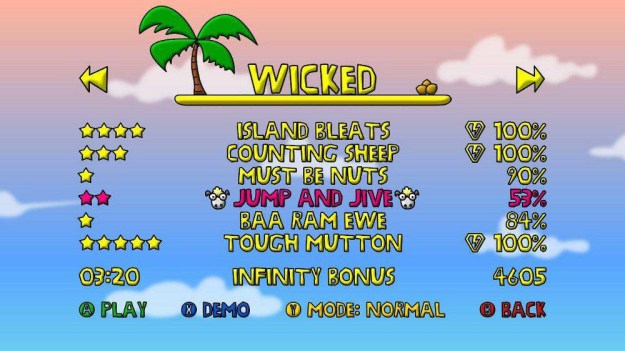
 The Most Addicting Sheep Game is a seemingly simple rhythm app for the iPad where jumps and rolls must be perfectly timed to the music by tapping or swiping on the screen. It is easy to learn, but tricky to master.
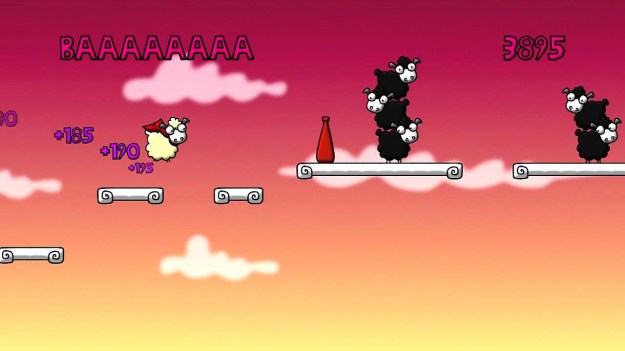 The sheep can jump at either one, two or four beats and can also jump two different height levels. An obstacle on the path – such as a tower of balancing sheep – requires a swipe to knock down. This means, as with most things to do with playing music, your brain is concentrating on multiple things at the same time. The picture above shows one beat and two beat lengths, a double jump and single jumps plus swipes. All of that would take less than five seconds to execute. Plus it all has to be done strictly in time with the music!
 The graphics are cute and the music is catchy. At first the music can be annoying – especially when you aren’t being successful – but all of a sudden you will find it’s an integral part of the mood and the fun.
 You can find it