
During her lesson, Miss 12 worked hard on learning a tricky section of her new piece and was feeling proud. After lots of praise, I asked her what she needed to do next to ensure she didn’t forget it. Her face fell, her shoulders slumped and she mumbled, “Practise.”
Why is it such a dirty word? Why do students work so hard to resist practising?
To an adult, it’s a pretty simple equation… they want to play well, so they know they have to do some work to reach that goal. But the kids still only see it as a chore, even though they have the same goals. I thought about the other activities in their lives.
 When they play sport, they accept they will have to go to training sessions. Many of them probably practise their ball skills at home. But they don’t call it practise.
Dancers are usually working towards exams or recitals or both. They need to put in many hours of practise to get to that level. But they don’t call it practise.
Children work hard all day at school and come home with more work to do. Short-term and long-term homework assignments. But they don’t call it practise.
Training. Rehearsing. Drilling. Preparing. So many other words for what is essentially the same skill; repeated exercise of an activity or skill to acquire or maintain proficiency.
Miss 5 arrived at her lesson after a celebration day at school and announced, “We didn’t do any learning today, so I don’t think you should teach me anything now.” (Mind you, lessons for that age involve a lot of movement, games and activities, so it’s not about boring learning). She didn’t want to be taught.
 These days there are coaches for everything – fitness coaches, vocal coaches, sport coaches, diet coaches, life coaches, drama coaches, executive coaches, dance coaches. The list goes on and on.
I wonder if the language directs the perception? Perhaps piano teachers should become piano coaches. Maybe kids should be training or rehearsing between their coaching sessions.
Either way, when kids don’t practise, piano lessons are not productive. Consistent, effective practise provides the lesson with something upon which to build and keeps the progress moving forward. With no practise, the same pieces, skills and information are having to be repeated every week and lessons begin to feel like being stuck in a rut. Nobody likes that!
 Try it out with your kids. Change the language. See if they are happier to rehearse or to train or even to prepare for their next coaching session. Modify the vocabulary and find what works for them. Whether we like it or not, neglecting practise – or not practising enough – is not going to get them anywhere. But perhaps rehearsing or training will.
If you are considering music lessons for your child or for yourself, please contact me to discuss the options. Piano lessons are conducted at my studio in Wallsend, NSW.
 The Most Addicting Sheep Game is a seemingly simple rhythm app for the iPad where jumps and rolls must be perfectly timed to the music by tapping or swiping on the screen. It is easy to learn, but tricky to master.
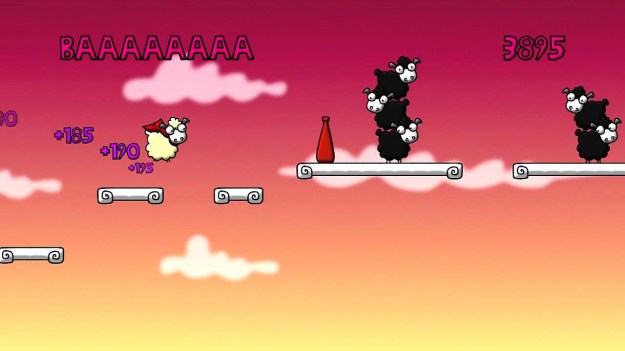 The sheep can jump at either one, two or four beats and can also jump two different height levels. An obstacle on the path – such as a tower of balancing sheep – requires a swipe to knock down. This means, as with most things to do with playing music, your brain is concentrating on multiple things at the same time. The picture above shows one beat and two beat lengths, a double jump and single jumps plus swipes. All of that would take less than five seconds to execute. Plus it all has to be done strictly in time with the music!
 The graphics are cute and the music is catchy. At first the music can be annoying – especially when you aren’t being successful – but all of a sudden you will find it’s an integral part of the mood and the fun.
 You can find it

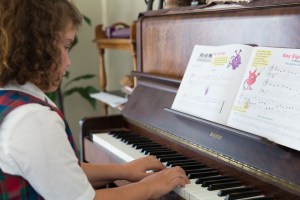

 2. Set a goal. No matter what your level, from beginner to advanced, you can benefit from setting some practise goals. You may want to learn a new song, memorise a piece or even improve your sight reading. Set interim goals for yourself along the way so you can check in and make sure you’re on track.
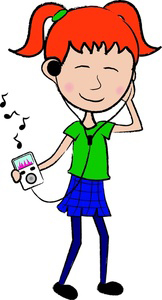 4. Listen. While this won’t actually exercise your playing muscles, it is a very important part of learning and studying music. Listen to lots of different pianists and listen to other instruments as well. Children tend to only know the music styles listened to by their parents, so its a good opportunity for them to be exposed to a variety of genres. One of my students has grown up with the classic rock of her parents but has recently discovered musical theatre soundtracks (thanks, YouTube). She is enthralled with how the mood of the music tells a story and often comments on “the power” she hears in songs. Expose your musical ear to all sorts of things. You won’t like them all, but you will find plenty you do like.

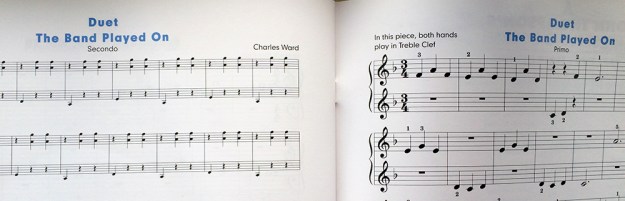 I still enjoy the fullness of sound a duet provides and regularly play a duet ‘together with myself’, where I record the Secondo (bottom part) on my digital piano and then play it back while I play the Primo (top part). Duets are certainly a special experience :-)

 Blob Chorus by Lumpty Learning is one such app, which introduces students to basic pitch recognition in a fun way. It is used in thousands of schools around the world because it also works well in a group setting, but its simplicity means it is also totally suitable for individual lessons.
 Although the game always opens with the default of three blobs, you can set the game to as little as two (which is the best place to start). As you improve, you can increase the number of blobs in the choir. The maximum is eight blobs, which is very difficult.
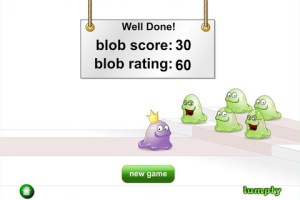 The game is separated into groups of ten questions; after each set of ten you will receive a score and an overall rating.
 merri bell music