
Parents who have never played a musical instrument often feel lost when it comes to helping their child practise at home. They may feel their ability to help is limited to phrases such as, “It’s time to practise the piano!” or “Your lesson is in 15 minutes – quickly do some practise!” or even, “Did you remember to practise this week?” But it doesn’t have to be this way.
Believe it or not, non-musical parents outweigh musical parents most of the time. Even if you don’t know one note from another, can’t hold a tune or recognise a treble clef, you still have the skills required to help your child learn how to do these things.
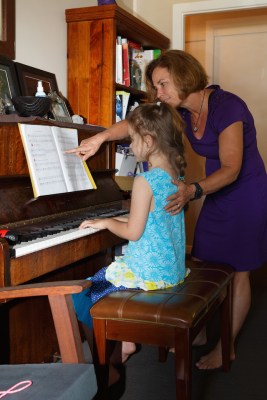 In this first part of a two-part post, we will look at some of the ways you can help your child that don’t involve the music itself. Part two (in two weeks) might surprise you with the ways in which you can be involved with the content of their practise.
1. Make practising like brushing teeth. Piano practise shouldn’t be something that is done only when there is spare time. Let’s face it… we have to bug our kids to do even the simplest things sometimes (like brushing their teeth or having a shower) so why should piano practise be any different? Yes, you may need to continually hound them, but they will better understand the commitment required if they see you making practise a priority. Practise = progress.
2. Use flashcards to work with them on their music theory; note names, values, symbols and terminology. I have pdf files of flash cards I can share with the parents of my students.
3. Encourage them to perform for friends and relatives. Even for yourself. They can perform for you each week, after they have spent most of the week working on their pieces.
4. Let them hear you bragging about them to other people – it may be about how well they are playing but it could also be about how disciplined they are with practicing.
5. Have them practise when they are awake and alert – practicing in a state of fatigue won’t get them very far.
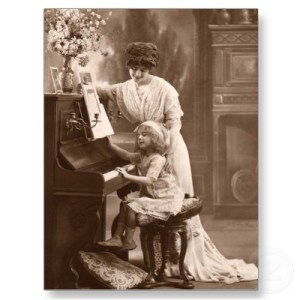 6. Ensure they are sitting correctly at the piano. Keep an eye on them and if you see them slouching, suggest they hold their back straight. This will not only stop body fatigue but will also help them balance their arms and hands properly. Their teacher should also be able to show you how they should be holding their hands, so you can keep an eye on that as well.
7. Allow them to have some “messing around” time at the piano; it doesn’t all need to be structured. This type of activity encourages creativity and early composition skills. I love it when a student turns up and starts the lesson with, “Guess what I made up this week?”
8. Help them organise their practise; schedule it into their routine and keep track of how much they are doing (this doesn’t include the “messing around” time mentioned above).
9. Accept there will occasionally be tears and frustration… learning the piano is not easy! Take a break (and a deep breath) and assess whether or not it is worth proceeding after the break. Either way, encourage your child to note the problem area so their teacher can help them with it at the next lesson.
Part two will be published next month. (This can now be found here.)
If you are considering music lessons for your child or for yourself, please contact me to discuss the options. Piano lessons are conducted at my studio in Wallsend, NSW.








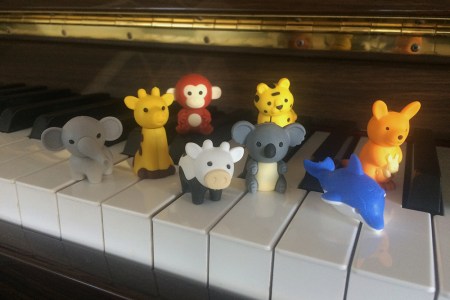 One little girl sometimes asks for them to watch as she plays and she arranges them either on the music stand, or on top of the piano, and then performs for them. They bring her confidence.
 You want to always leave a practise session with at least a part of what you are playing sounding and working better than when you started. But that doesn’t need to be the whole piece. A small section of improvement is far better than a whole piece left at the same level. But something needs to improve.
 Practise shouldn’t be a chore. It is an opportunity.
  I have written before about the reasons why I
 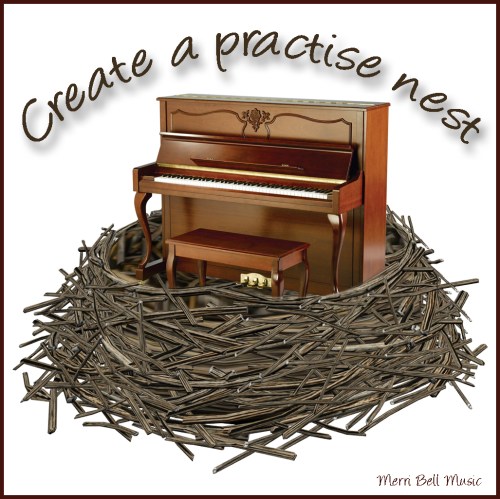 1. When choosing a location for your piano, select a space that is lived-in, welcoming, and well-lit. Keep it close to ‘the action’ but not in the action. Your children will gravitate to the piano more often if it is in a central place in your home. Avoid bedrooms, basements and other out of the way places. Feeling shut-off from the family while practising will inevitably lead to a reluctance to spend time on the piano.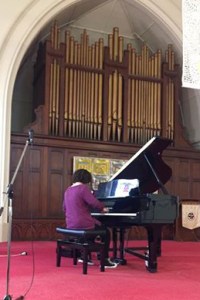


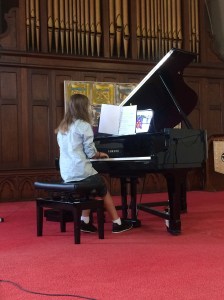

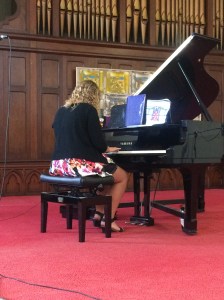
 Here are some ideas for ways you can help your child prepare for their big moment:
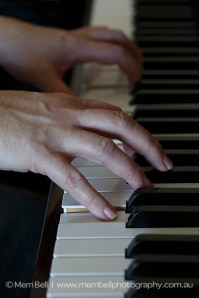 Make practise a priority! If children don’t practise, they don’t play well and they may start to believe they can’t play the piano. You have made a financial commitment to your child’s piano lessons, so they need to show the same level of commitment by practising, or your money will be wasted. Schedule it in with all their other commitments.
 I recently wrote a
