
Parents who have never played a musical instrument often feel lost when it comes to helping their child practise at home. They may feel their ability to help is limited to phrases such as, “It’s time to practise the piano!” or “Your lesson is in 15 minutes – quickly do some practise!” or even, “Did you remember to practise this week?” But it doesn’t have to be this way.
Believe it or not, non-musical parents outweigh musical parents most of the time. Even if you don’t know one note from another, can’t hold a tune or recognise a treble clef, you still have the skills required to help your child learn how to do these things.
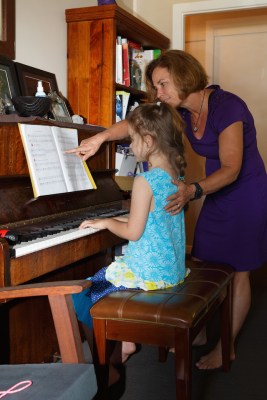 In this first part of a two-part post, we will look at some of the ways you can help your child that don’t involve the music itself. Part two (in two weeks) might surprise you with the ways in which you can be involved with the content of their practise.
1. Make practising like brushing teeth. Piano practise shouldn’t be something that is done only when there is spare time. Let’s face it… we have to bug our kids to do even the simplest things sometimes (like brushing their teeth or having a shower) so why should piano practise be any different? Yes, you may need to continually hound them, but they will better understand the commitment required if they see you making practise a priority. Practise = progress.
2. Use flashcards to work with them on their music theory; note names, values, symbols and terminology. I have pdf files of flash cards I can share with the parents of my students.
3. Encourage them to perform for friends and relatives. Even for yourself. They can perform for you each week, after they have spent most of the week working on their pieces.
4. Let them hear you bragging about them to other people – it may be about how well they are playing but it could also be about how disciplined they are with practicing.
5. Have them practise when they are awake and alert – practicing in a state of fatigue won’t get them very far.
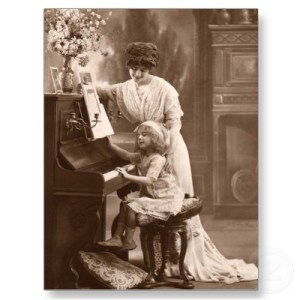 6. Ensure they are sitting correctly at the piano. Keep an eye on them and if you see them slouching, suggest they hold their back straight. This will not only stop body fatigue but will also help them balance their arms and hands properly. Their teacher should also be able to show you how they should be holding their hands, so you can keep an eye on that as well.
7. Allow them to have some “messing around” time at the piano; it doesn’t all need to be structured. This type of activity encourages creativity and early composition skills. I love it when a student turns up and starts the lesson with, “Guess what I made up this week?”
8. Help them organise their practise; schedule it into their routine and keep track of how much they are doing (this doesn’t include the “messing around” time mentioned above).
9. Accept there will occasionally be tears and frustration… learning the piano is not easy! Take a break (and a deep breath) and assess whether or not it is worth proceeding after the break. Either way, encourage your child to note the problem area so their teacher can help them with it at the next lesson.
You can find part two of this post here.
If you are considering music lessons for your child or for yourself, please contact me to discuss the options. Piano lessons are conducted at my studio in Wallsend, NSW or mobile lessons are available in the eastern suburbs of Lake Macquarie.

 Why practice scales?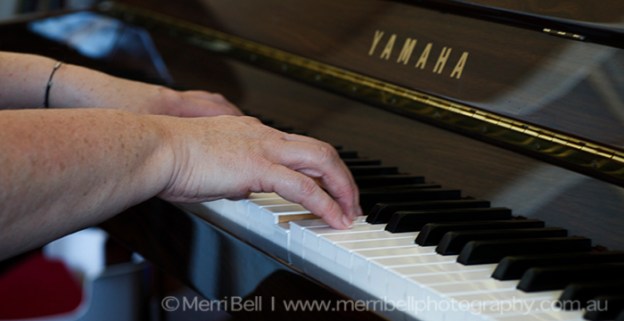

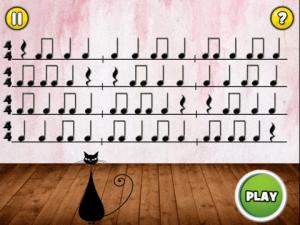 Rhythm Cat teaches and reinforces the most commonly-used musical rhythm notation. The free ‘Lite’ version has 15 levels while the ‘Pro’ version works up to following three different colours in each rhythm, encouraging co-ordination of both hands.
 The ‘Cat’ family also includes ‘Treble Cat’ and ‘Bass Cat’. I don’t tend to use Bass Cat with my beginners because it starts in a different octave, but Treble Cat is better suited. These games involve recognising the notes from amongst a group of notes, not just on their own. The notes also move slowly, giving you plenty of time to recognise the correct notes.
 A basic note recognition app, NoteWorks is customisable for difficulty, including clef/s and range of notes. The interface and sound effects are fun for younger students, but the app still moves quickly enough to be challenging for older students and adults.


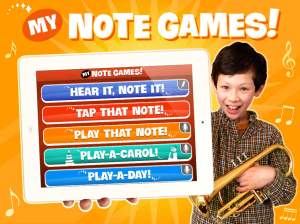 Tap that Note uses the device to identify notes, while Play that Note requires you to play to specified note on the piano (or whatever instrument you tell the app you are using). Play-a-day is a great sight reading exercise for intermediate students. As the name suggests, Hear It, Note It – also available as a standalone game – involves listening to what is played and notating it and has three difficulty levels within. Activities include tasks such as adding accidentals to correct a scale or completing rhythms with notes, rests and bar lines.
 While it does contain basic note recognition, Tenuto is really suited to more advanced students, as the majority of activities are more complex.

 In our late teens to early adulthood, these differences became our strengths. We worked together really well because we complemented each other and didn’t suffer from competition. Even when we sang, I sang the soprano to her alto. When she moved on to singing lessons, I accompanied all her practising. The picture on the right is a famous artwork that was on the cover of a card she once gave me.
 While most previous studies had used only strongly-emotive music, this study had participants bring in music they preferred. This ranged from classical music through to techno, country, film soundtracks and heavy metal. The participants were then studied using MRI while listening to 60 different excerpts of new music, based on their musical taste. They also had the option to ‘buy’ a song in a mock online store, based on the 30-second samples.
 Because of this, it is not really appropriate to take the, “we’ll try it for a few months and see how it goes” approach. The commitment needs to be made for at least a couple of years. It’s about being realistic about what it takes to gain musical skills.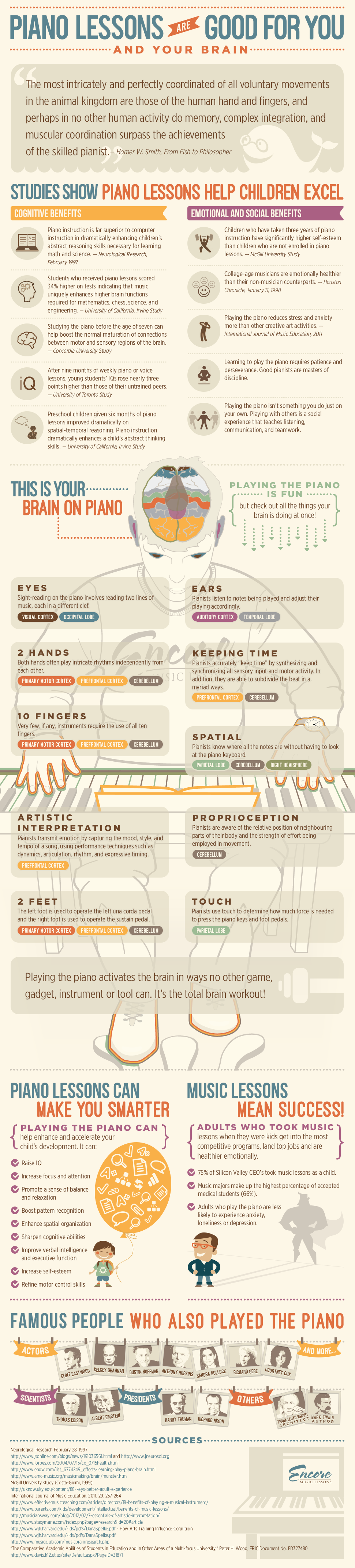
 merri bell music