Can you play the piano with long fingernails? Of course you can.
But should you?
That question has an entirely different answer.
Long fingernails cause a multitude of problems for a pianist in the areas of:
- Hand position
- Control
- Fluency and Speed
- Tone and Expression
- Risk of injury and pain
The fingertips are a crucial connection between you and the piano.
These points are relevant to hand position in general and important for all pianists, but long fingernails will immediately compromise good hand position.
Hand Position
From the very first lessons at the instrument, correct hand position is stressed and supported. This position is natural and requires no extra effort. If the nails are too long, the fingers are extended, the position is no longer natural and everything becomes more difficult. Having the fingers stretched out exerts unnecessary strain on the hands, as well as making movement much more awkward.
One very important aspect of hand position is developing strong, supportive first knuckles (the ones nearest the nail). If the fingernails are too long, it is impossible to support this knuckle and typically the knuckle will collapse inwards. At this point the knuckle and finger ‘lock’ into place, severely impeding movement as the finger sinks into the key. If the knuckle doesn’t collapse, there is a tendency for the finger to slip on the keys, or a ‘wiping’ motion is introduced, because the knuckle isn’t supporting the finger.
Control
With the correct hand position you can feel the keyboard and have more control over how your hands and the keys connect. Piano keys don’t simply go up and down; there is so much nuance available. Where the finger is on the key, the depth of pressure, the speed of the attack and how the finger approaches the key are all elements of control that are lost if the fingers are flat.
Fluency and Speed
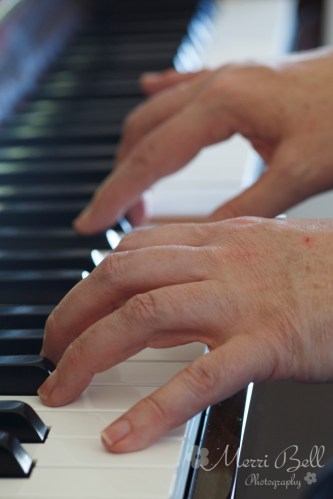
You can possibly get away with playing with flat fingers if you are playing some types of music such as chords and slow passages, but for anything requiring speed and precision, flat fingers are definitely out. The photo below shows how the hands would be positioned and you can see it would be impossible to move quickly around the keys (particularly around the black keys). The length of the nail means the pad of the finger would struggle to connect with the key and the nail itself cannot depress the key.

Long nails simply get in the way of fluent movement. Playing may end up sounding muddy or clumpy as the hands struggle to move smoothly to their next position.
Tone and Expression
All the other points lead to this. You play an instrument because you want to produce beautiful music. You want to play expressively. We don’t always keep the fingers curved, but you need to have the choice. Different articulations require different techniques and hand shapes. For example, finger staccato requires great control of the first knuckle to produce crispness, whereas flattening slightly and using more of the pad may produce a warmer, singing tone.
You feel the keys, know the weight of the keys and learn how you can produce different sounds with just a tiny change of your hands and fingers.
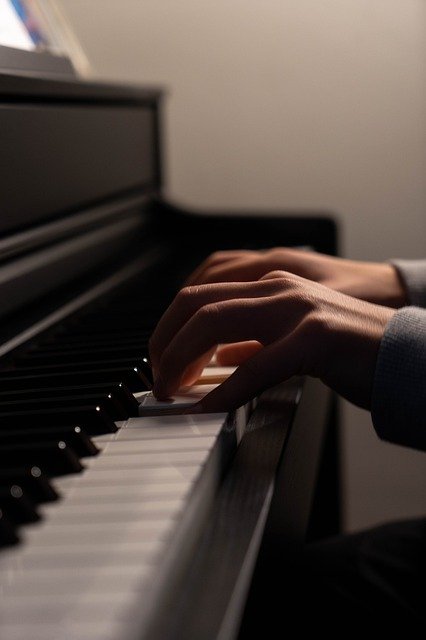
Long nails mean flat fingers that cannot grip the keys, which results in only one level of tone quality; everything sounds the same.
Additionally, long nails usually result in a constant “click click” sound as the nails hit the keys… most distracting for the listener!
Injury and Pain
Nails can get caught in between the keys, especially when you are navigating around the black keys, or when moving quickly through larger intervals. The result? Nails being torn off. Additionally, continual pressure on the end of the nail from contact with the keys can cause pain in the nail bed, particularly with false nails.
The incorrect hand position that results from long fingernails creates unnecessary tension that moves through the hand, wrist and forearm resulting in painful strain to connective tissues.
If students don’t like the sound they are producing, they won’t continue to play (and they certainly won’t want to practise). The most common means of sabotage are a poor instrument – either non-weighted keyboards, or out of tune pianos – and poor sound as a result of poor hand position. We want students to have control over what and how they are playing and to love the sounds they produce.

If you are considering music lessons for your child or for yourself, please contact me to discuss the options. Piano lessons are conducted at my studio in Wallsend, NSW.
 There are various benefits for singing during piano lessons:
 It is certainly more difficult to encourage students to sing than it is to get them to play, as singing seems to involve displaying a little more of ourselves, but it is this inner emotion we are trying to release. This is what we need in our playing. Once the students open up and let go, understanding how the music feels, they can really put some energy and feeling into what they’re playing.
 Athletes warm up before a game. They train with lots of repetitious drills so their body learns those actions and they can incorporate them into their game. Dancers work through lots of exercises to develop their physical skill. They also warm up before they dance. This is accepted as normal. Playing the piano incorporates a large portion of physical skill. It requires a strong technical foundation. Trying to play pieces of increasing difficulty without gradually building the physical skills required is like running a marathon because you understand the mechanics of running but haven’t trained. The result will be frustration.
 This is a no-brainer and has been covered in many previous blog posts. Lessons are generally as short as 30 minutes, and are when new concepts and material are taught, not where practise happens. Those concepts then need to be consolidated with practise at home, or at the next lesson you will still be in exactly the same place you were the week before. Practise is about feeling accomplished; setting a goal (even a small one) and achieving it.
 Having your piano in an out-of-the-way location. Having your piano or keyboard tucked away in a spare room or an area of the house not regularly accessed doesn’t encourage regular practise. Out of sight, out of mind! Have your piano in a prominent position in the house so it acts as a constant reminder.
 Blob Chorus by Lumpty Learning is one such app, which introduces students to basic pitch recognition in a fun way. It is used in thousands of schools around the world because it also works well in a group setting, but its simplicity means it is also totally suitable for individual lessons.
 Although the game always opens with the default of three blobs, you can set the game to as little as two (which is the best place to start). As you improve, you can increase the number of blobs in the choir. The maximum is eight blobs, which is very difficult.
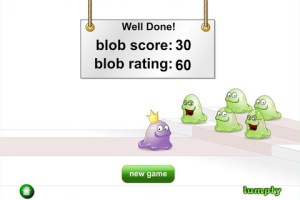 The game is separated into groups of ten questions; after each set of ten you will receive a score and an overall rating.
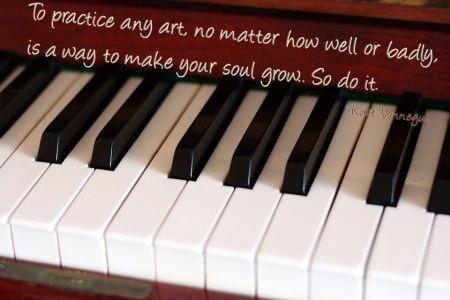 Always starting from the beginning. If you start a piece at the beginning every time you play it, you will find you quickly become proficient at the start of the piece but less so as the piece goes on. I often tell my students to start at the part they find the most difficult, work on that part and then incorporate it back into the song.
 I have written before about the reasons why I
 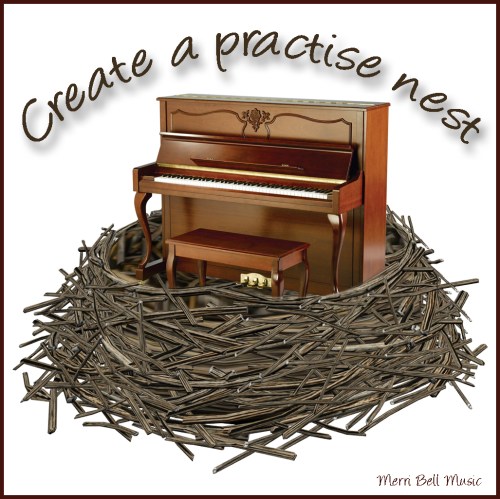 1. When choosing a location for your piano, select a space that is lived-in, welcoming, and well-lit. Keep it close to ‘the action’ but not in the action. Your children will gravitate to the piano more often if it is in a central place in your home. Avoid bedrooms, basements and other out of the way places. Feeling shut-off from the family while practising will inevitably lead to a reluctance to spend time on the piano.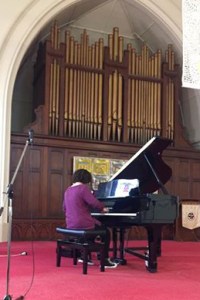



 I recently wrote a
  merri bell music