Tag Archives: music lessons

It’s Just a Sibling Kinda Feeling – Piano Teacher in Wallsend, NSW

“Siblings are the people we practice on, the people who teach us about fairness and cooperation and kindness and caring – quite often the hard way”
– Pamela Dugdale

It’s a good feeling when the sibling of a current student starts lessons; it means I must be doing something right!

As the younger of two sisters, I never knew what it was like to not learn piano while my older sister was also learning. We had lessons on the same days, we practised one after the other and we worked towards exams at the same time. We played duets together, we challenged each other, we created, transposed and harmonised together and we laughed a great deal.

I realise that for her as the older sister, it was probably a different scenario. While I idolised my big sister and wanted to do whatever she did, she probably didn’t appreciate a little interloper in her arena.

As far as lessons went, our wonderful teacher, Sr Marie Therese realised how different we were in style, technique and temperament. Also, our mother requested I didn’t play too many of the same pieces as my sister, even though I was three years behind her. (When you are practicing twice a day, exam pieces soon become extremely repetitive for the poor listeners!). While our carefully-chosen early method book pieces were the same, once we moved into grade work Sister catered for our different styles. My sister usually played the intricate, technical pieces, while I played the more emotive works.

Piano Teacher Wallsend Newcastle NSWIn our late teens to early adulthood, these differences became our strengths. We worked together really well because we complemented each other and didn’t suffer from competition. Even when we sang, I sang the soprano to her alto. When she moved on to singing lessons, I accompanied all her practising. The picture on the right is a famous artwork that was on the cover of a card she once gave me.

These memories hold important lessons that I bring into teaching siblings – respect and encourage their individuality, make no comparisons and ensure enough variety in materials used to save the parents’ sanity!

Sibling rivalry/competition – whether blatant or subtle – can be a problem and for this reason it is usually not advisable to start siblings at the same time. However, the following positives usually outweigh the competitive aspect:

  • Both/all kids need to practise daily, so both are on similar schedules
  • The siblings can share a common interest
  • Older siblings can help the younger ones
  • Younger siblings can be inspired by older brothers and/or sisters
  • They can all have fun playing duets – even if they play different instruments
  • The younger sibling has seen the work involved by watching the older child, so goes into lessons with a clearer expectation of what is required (eg they know they need to practise)

The main thing is to remember each child is different, with different abilities. I will always work with the parents to ensure this individuality is respected.

If you are considering music lessons for your child or for yourself, please contact me to discuss the options. Piano lessons are conducted at my studio in Wallsend, NSW or mobile lessons are available in the eastern suburbs of Lake Macquarie.

Piano teacher Wallsend Newcastle NSW

The Labèque sisters, Katia (born 11 March 1950) and Marielle (born 6 March 1952), are an internationally known French piano duo.


Encouraging More Practise – Piano Teacher in Wallsend, NSW

Establishing a practising routine can be hard work! Playing the piano is not easy and your kids will try all sorts of excuses to get out of practising. It is important to set practise time into their general routine so it has a place and is not just something that is done if they have leftover time.

Following are some tips to encourage more practise:

  • Never underestimate a reward system. Use whatever works for your child; it could be anything from extra iPad time to an exemption from a household chore. Their reward may even be a favourite meal.
  • Schedule practise time to happen before something they can relax with – free play time, for example. Of course, if you suspect this may lead them to rush through practise with no concentration, try another tactic.
  • Give your child something exciting to work for. Anticipation works wonders! Set a practise goal, wrap a little gift and pop it somewhere they can see it. Only when they reach the practise goal are they able to open their gift.
  • Connect their practise session with another activity that occurs every day. Perhaps your child could practise straight after breakfast or maybe before they start their homework. Whatever works for you.
  • Remember to reward yourself. This is your journey as well, so find something fun with which to reward yourself when you are successful at getting your kids to practise.

Piano Teacher Wallsend Newcastle NSW


A great little resource for practising tips for parents is the e-book “101 Piano Practice Tips”, which is available through Amazon.


If you are considering music lessons for your child or for yourself, please contact me to discuss the options. Piano lessons are conducted at my studio in Wallsend, NSW or mobile lessons are available in the eastern suburbs of Lake Macquarie.

Want to Reward Your Brain? Listen to New Music – Piano Teacher, Wallsend, NSW

Recently I attempted to have an MRI. I say ‘attempted’ because I failed. Miserably. Previously-unrealised claustrophobia swept in and took over… big time. Crying, sweating, shaking and stricken with headache and nausea, I was pretty quickly pulled out of the tunnel of terror and sent on my way.

But while I may now be overcome with unpleasant sensations at the very thought of an MRI (or any closed space) the technology is increasingly being used in research with very interesting results.

We all know it is impossible to listen to music and not be moved. What music moves us, how much and why are mysteries that have for many years intrigued both musicians and scientists. Last year a study* was undertaken at the Montreal Neurological Institute at McGill University in Canada to find out some of these answers.

Piano teacher Wallsend Newcastle NSWWhile most previous studies had used only strongly-emotive music, this study had participants bring in music they preferred. This ranged from classical music through to techno, country, film soundtracks and heavy metal. The participants were then studied using MRI while listening to 60 different excerpts of new music, based on their musical taste. They also had the option to ‘buy’ a song in a mock online store, based on the 30-second samples.
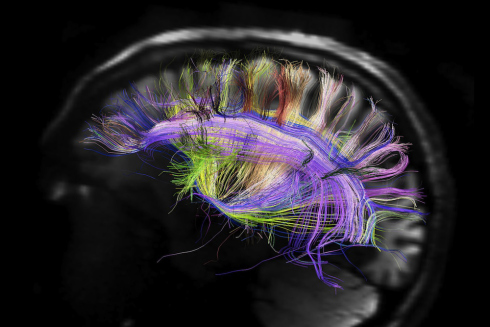
What was discovered was that a particular part of the brain becomes active when we hear a piece of music for the first time. This part of the brain is the nucleus accumbens, a zone that is operated by the chemical dopamine, which plays a major role in reward-motivated behaviour.

One of the researchers, Dr Valorie Salimpoor, said, “What’s cool is that you’re anticipating and getting excited over something entirely abstract – and that’s the next sound that is coming up.” The more a participant liked the music they were hearing, the more stimulated the ‘reward region’ of the brain became.

Because our brains are so well-suited to using patterns to predict what will happen next, we are constantly making predictions. Even if the piece of music we are hearing is new, our brains are predicting – based on past musical experiences – how it will unfold. If we enjoy the music more than predicted, the nucleus accumbens (partnering with pattern recognition and high-order thinking centres) fires off with delight.

“What makes music so emotionally powerful is the creation of expectations. Activity in the nucleus accumbens is an indicator that expectations were met or surpassed,” Dr Sapimpoor said.

So if you want to get that dopamine pumping and reward your brain, treat yourself to some new music. Launch your Spotify app or go through some recommendations in iTunes. You never know what joys you may discover.

And I promise you won’t have to visit an MRI machine to feel the benefits 🙂

Piano teacher Wallsend Newcastle NSW

Credit: Image courtesy of MGH-UCLA Human Connectome Project.

If you are considering music lessons for your child or for yourself, please contact me to discuss the options. Piano lessons are conducted at my studio in Wallsend, NSW or mobile lessons are available in the eastern suburbs of Lake Macquarie.

 
* The study is published in the journal, ‘Science”.
Salimpoor VN, Benovoy M, Larcher K, Dagher A, & Zatorre RJ (2011). Anatomically distinct dopamine release during anticipation and experience of peak emotion to music. Nature neuroscience, 14 (2), 257-262 PMID: 21217764

Helping Your Child Achieve Good, Quality Practise – Piano Teacher in Wallsend, NSW

Let’s assume your child has made a commitment to learning to play the piano and has ceased to see you as the ogre in the household because you are constantly hounding him/her to practise.  “That’s a fantasy world!” I hear you exclaim. Well, it may never become quite that easy, but there are some things you can do to ensure the practise sessions they do get through are as effective as possible.

Overall I think the most important thing you can do to show your child you are committed to their learning and progress, is to schedule their practise time in to your weekly schedule. It should be included in their regular tasks, just like school homework (and also ensures “too much homework” doesn’t become an excuse for not practising).

Try some of the following tips and see what works best for you:

  • Encourage your child to practise most days (with a couple of ‘rest days’ interspersed in between). Consistency is so important and regular, shorter practise sessions are far more effective than one or two long practises. The more they practise, the more they will improve and this will increase their enjoyment of playing the piano.
  • This may seem obvious, but encourage your child to really focus when they are practising. Chances are their mind is more engaged in what they are wanting to do next and if they are rushing to finish, they will make more mistakes. This will only result in increased frustration and no improvement in their playing. A short practise brimming with focus is far more effective than a long, unfocussed session.
  • Encourage your kids to play the pieces they find difficult. If they are becoming frustrated, have them play with hands separately and become comfortable with that before joining their hands back together.
  • Piano teacher Wallsend Newcastle NSWLet them write on their music (in pencil, of course). While you don’t want them writing in every single note name, marking up spots where they are having trouble every time may help. It might be the note names of a tricky passage or an unusual timing count that trips them up. Having a little help written in may increase their confidence with the whole piece.
  • Encourage slow playing, particularly of new songs. Most of us – not just the kids – have a tendency to want to play quickly, particularly once we know how the piece should sound. What we risk doing is ‘practising-in’ mistakes and learning the piece incorrectly. It is also frustrating for both there person playing and the person listening! Playing slowly also helps increase control. Once they are more familiar with the piece, playing it faster will come naturally.
  • Count out loud. Nice and simple. If the timing is tripping them up, counting out loud is far more effective than counting silently in their heads; it makes the count more dominant.

If you are considering music lessons for your child or for yourself, please contact me to discuss the options. Piano lessons are conducted at my studio in Wallsend, NSW or mobile lessons are available in the eastern suburbs of Lake Macquarie.

Think Long-Term – Piano Teacher in Wallsend, NSW

Remember the great info-graphic/picture from last week’s blog post that talked about all the ways learning music helps to train your brain?

There are so many benefits to learning to play an instrument, but they aren’t all going to happen overnight. As well as the cognitive training, the muscles required to play the piano need to be developed as does the control and coordination required to play.

Piano teacher Wallsend Newcastle NSWBecause of this, it is not really appropriate to take the, “we’ll try it for a few months and see how it goes” approach. The commitment needs to be made for at least a couple of years. It’s about being realistic about what it takes to gain musical skills.

Besides, you have made a substantial investment in not only time, but tuition fees, music and possibly even an instrument. You want it to be worth it!

If you are considering music lessons for your child or for yourself, please contact me to discuss the options. Piano lessons are conducted at my studio in Wallsend, NSW or mobile lessons are available in the eastern suburbs of Lake Macquarie.


It’s Not Just About the Piano – Piano Teacher in Wallsend, NSW

“He gets so much more from this time than just piano.”

Oh, such wonderful music to my ears!

Yesterday I was having a conversation with the mother of one of my students, discussing our musical goals for her child. It was such a blessing to hear her say the words above, because that is exactly what I aim for when I teach. I love spending time with my students, watching them blossom, learn new skills and gain confidence. In fact, last week I was so excited when a teenage student finally (and beautifully) grasped a technique with which she had been struggling, my gleeful reaction gave her a wonderful chuckle! And a lot of pride :). I don’t want the only thing your child walks away with to be the basic piano know-how – these are the notes and this is where they are on the keyboard etc.

My hope is that the environment I provide in my Wallsend studio is encouraging, yet relaxed. I want my students to enjoy coming to their lessons and to know that I will guide and support them to meet the goals we have developed together. I am strict with technique, because I want my students to be the best they can be. Good technique translates to ease of playing, which ultimately will make it easier for them to simply enjoy what they are creating at the piano. But it’s about so much more than that.

Following are just some of the benefits I hope my students will take away from their time with me:

  • Increased confidence – learning to play the piano is hard work and requires dedication from the student. With each song they master, your child’s self-esteem will increase. Learning that mastering a new  skill is a patience-requiring process helps kids then approach other tasks in their life with a similar level of confidence instead of frustration.

  • Theory/musicianship – when learning to play an instrument, good theoretical knowledge is a vital skill that goes hand-in-hand with the practical playing. It’s not just about learning the concepts, but how those concepts fit in to what they are playing. Not just how to do something, but why you are doing it. Understanding how music is constructed not only helps with understanding music that is already written, but also aids greatly with improvisation and composition.

  • One-on-one attention – let’s face it… who doesn’t need this every now and then? Life today seems to be so busy, even for children. Their lesson is an opportunity for everything to be about just them. I enjoy learning about their lives and other interests so I can better understand them and how their minds operate but to them, this time is simply about them being special.

  • Critical and creative thinking – reading a piece of music requires a large dose of focus. The student needs to interpret both a rhythm and a note and translate that into what their hands will do on the keyboard, also considering technique. Then they need to immediately move on to the next one! A whole page of that can be rather daunting, but pianists develop these complex thought processes they will then take into many other areas of their life.

  • Music appreciation – through playing the piano, students are exposed to a range of music they might not otherwise encounter, from classical through to jazz and pop. I think it is important to be not just playing music, but immersing yourself in it and learning to appreciate the way different styles make you feel. Most people will identify a style of music they like for relaxation or for concentration, for example. I find Baroque is great for studying, but when it’s time for the housework, I need a good beat!

So it may not be that every week your child (or yourself, because this also applies to my adult students) comes home with a new piece of music to practise through the week, but they will have spent their lesson time immersed in music, feeling special, developing skills and absorbing more than they realise.

If you are considering music lessons for your child, please contact me to discuss the options. Piano lessons are conducted at my studio in Wallsend, NSW or mobile lessons are available in the eastern suburbs of Lake Macquarie.

piano teacher Wallsend NSW

Sight Reading Tips – Piano Teacher in Wallsend, NSW

Sight reading is such an important skill for any musician to master. As a teacher, my ultimate aim is to teach my students the skills they need to be able to pick up a piece of music and play it on sight. No stress, no struggle – just enjoyment.

For examination students, it is also a component of the exam (for grades beyond Preliminary), so is certainly a necessary skill.

But sight reading doesn’t come as easily to some as it does to others.

The following article was written in consultation with educators who specialise in the skill of sight reading, hoping to make it less scary and more enjoyable 🙂

Piano lessons Wallsend NSW


10 Tips for Sight Reading Music


If you are considering music lessons for your child, please contact me to discuss the options. Piano lessons are conducted at my studio in Wallsend, NSW or mobile lessons are available in the eastern suburbs of Lake Macquarie.

Piano Teacher Wallsend NSW

10 Stretches for Musicians – Piano Teacher in Wallsend, NSW

It is easy to underestimate the physical demands placed on our bodies when playing music. To prevent common injuries, we need to develop endurance, control and overall flexibility. Instrumentalists use their arm, hand and finger muscles extensively while performing and practising, making them vulnerable to a range of injuries.

Our bodies were designed to move, not hold static positions for a length of time as we do when playing an instrument. Added to this, musicians have the general problem of often spending these lengthy periods in far-from-natural positions.

Good posture is important whenever possible, so the body experiences correct alignment, therefore placing minimum stress on the body. Because the inevitable reality for musicians is a less-than-ideal posture that can lead to imbalances in flexibility and strength, it is imperative to keep our bodies flexible.

We can prevent injuries, relieve tension and ease arm and hand pain by integrating stretching exercises into our routine.

The following helpful article lists ten essential stretches for musicians. We warm up our instruments, so we should warm up our bodies as well.

Piano lessons Wallsend NSW


10 Essential Stretches for Musicians


If you are considering music lessons for your child, please contact me to discuss the options. Piano lessons are conducted at my studio in Wallsend, NSW or mobile lessons are available in the eastern suburbs of Lake Macquarie.

Piano lessons Wallsend NSW

Why sit for an exam? – Piano Teacher in Wallsend and Lake Macquarie, NSW

Some students prefer the structure of working towards an exam, while others prefer to play just for enjoyment. Both options are perfectly good.

At merri bell music all students are taught the skills and techniques required for an exam even if they are learning for their own pleasure. I believe these skills will help them to play better, thereby increasing the range of music they are able to play and consequently enhance their enjoyment.

For those who are sitting on the fence about exams and don’t know whether to take the plunge, the AMEB (Australian Music Examinations Board) has recently published an article that lists five great reasons for sitting an exam. Rather than me repeating all the information, please click on the following link:

Why take an exam?

If you are considering music lessons for yourself or your child, please contact me to discuss the options. Piano lessons are conducted at my studio in Wallsend, NSW or mobile lessons are available in the eastern suburbs of Lake Macquarie.

logo_1_0_0

Why are music lessons so important? – Piano teacher in Wallsend and Lake Macquarie, NSW

The ancient Greek philosopher Plato said, “I would teach children music, physics and philosophy; but more importantly music; for in the patterns of music and all the arts, are the keys to learning”.

Plato certainly had a point. Music uses both sides of the brain, a fact that makes it valuable in all areas of development as it affects the growth of a child’s brain academically, emotionally, physically and spiritually.

Many studies conducted around the world have concluded there are benefits to children of learning music, with just a few examples listed below:

  • Music is to the brain as physical exercise is to the human body. Music tones the brain for auditory fitness and allows it to decipher between tone and pitch.
  • Children who study a musical instrument are more likely to excel in all of their studies, work better in teams, have enhanced critical thinking skills, stay in school, and pursue further education.
  • A Swiss study of 1200 children showed how playing music helped children’s reading and verbal skills by improving concentration, memory and self- expression.
  • A Hong Kong study found that adults who had music training before the age of 12 years were better able to recall spoken words than adults who had little or no training in music.
  • A US study discovered that children aged 5–7 years who had been lagging behind in their school performance caught up with their peers in reading and were ahead of them in maths after seven months of music lessons.

We are emotional beings and every child requires an artistic outlet. Music is emotional and is an art form – it may be your child’s vehicle of expression.

Music is for life. Most people won’t be still playing soccer or netball at 70 or 80 years of age but they can sing. And they can play the piano or some other instrument. Music is a gift you can give your child that will last their entire lives.

If you are considering music lessons for your child, please contact me to discuss the options. Piano lessons are conducted at my studio in Wallsend, NSW or mobile lessons are available in the eastern suburbs of Lake Macquarie.


Piano lessons Wallsend NSW

Mobile lessons in Lake Macquarie, NSW