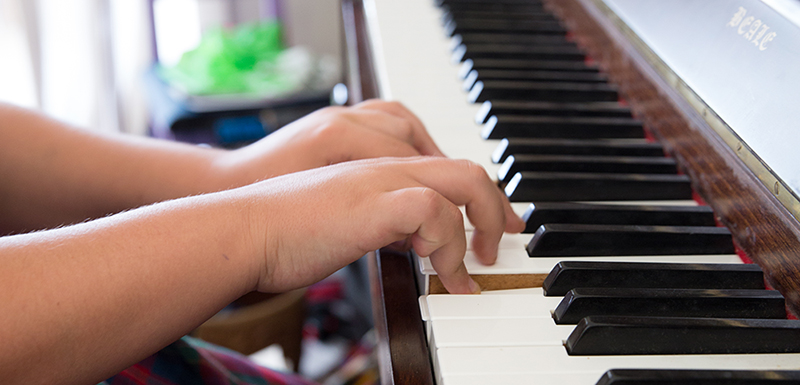
Establishing a practising routine can be hard work! Playing the piano is not easy and your kids will try all sorts of excuses to get out of practising. It is important to set practise time into their general routine so it has a place and is not just something that is done if they have leftover time.
Following are some tips to encourage more practise:
- Never underestimate a reward system. Use whatever works for your child; it could be anything from extra iPad time to an exemption from a household chore. Their reward may even be a favourite meal.
- Schedule practise time to happen before something they can relax with – free play time, for example. Of course, if you suspect this may lead them to rush through practise with no concentration, try another tactic.
- Give your child something exciting to work for. Anticipation works wonders! Set a practise goal, wrap a little gift and pop it somewhere they can see it. Only when they reach the practise goal are they able to open their gift.
- Connect their practise session with another activity that occurs every day. Perhaps your child could practise straight after breakfast or maybe before they start their homework. Whatever works for you.
- Remember to reward yourself. This is your journey as well, so find something fun with which to reward yourself when you are successful at getting your kids to practise.

A great little resource for practising tips for parents is the e-book “101 Piano Practice Tips”, which is available through Amazon.
If you are considering music lessons for your child or for yourself, please contact me to discuss the options. Piano lessons are conducted at my studio in Wallsend, NSW or mobile lessons are available in the eastern suburbs of Lake Macquarie.
 While most previous studies had used only strongly-emotive music, this study had participants bring in music they preferred. This ranged from classical music through to techno, country, film soundtracks and heavy metal. The participants were then studied using MRI while listening to 60 different excerpts of new music, based on their musical taste. They also had the option to ‘buy’ a song in a mock online store, based on the 30-second samples.
 Let them write on their music (in pencil, of course). While you don’t want them writing in every single note name, marking up spots where they are having trouble every time may help. It might be the note names of a tricky passage or an unusual timing count that trips them up. Having a little help written in may increase their confidence with the whole piece.
 Because of this, it is not really appropriate to take the, “we’ll try it for a few months and see how it goes” approach. The commitment needs to be made for at least a couple of years. It’s about being realistic about what it takes to gain musical skills.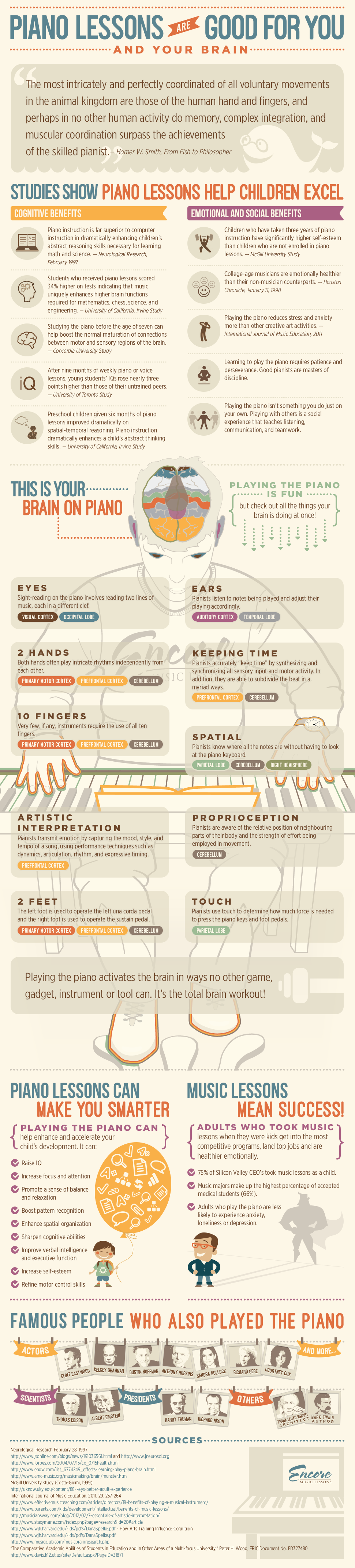

 Make practise a priority! If children don’t practise, they don’t play well and they may start to believe they can’t play the piano. You have committed to your child’s piano lessons by paying for them, so they need to show the same commitment by practising or your money will be wasted.