
Because music is an art form and is appreciated audibly and emotionally, it can be easy to forget that a good performance is rooted in physical skill. Playing an instrument well takes time, dedication and that scary-but-shouldn’t-be word… practise.
In the past week I have had a few conversations with different students and parents about practise techniques, so thought it might be time for a refresher post about the main things to remember.
Repetition is the key. Muddling your way through a piece and finally reaching the other end doesn’t constitute effective practise; it’s just playing.
 You want to always leave a practise session with at least a part of what you are playing sounding and working better than when you started. But that doesn’t need to be the whole piece. A small section of improvement is far better than a whole piece left at the same level. But something needs to improve.
Identify and isolate the area causing the problem and work on just that section for a practise session. Then try putting it back into a larger section, or the whole piece.
More, shorter practise sessions are more effective than one large catch-up. Once you have spent the time working on something, you don’t want to leave it so long that when you return to the piano, you have forgotten what you learnt. A small section you have been working on may only take 5-10 seconds to play, so every time you walk past the piano, play it one more time.
“Effective practise is consistent, intensely focussed, and targets content or weaknesses that lie at the edge of one’s current capabilities.”* Clicking on this link will take you to a great little video by Annie Bosler and Don Greene that explains how practising affects our brains and the positive lasting consequences of effective practise. At less than five minutes’ duration, and full of interesting facts, please take the time to watch it. It discusses practising for any task, not specifically music, so is useful in many areas of life.
 Practise shouldn’t be a chore. It is an opportunity. This blog post I wrote twelve months ago outlines all the benefits effective practise brings to the student, beyond simply playing the piano.
There are lots of posts on my blog about practising, ranging from the how-tos through to ways you can make practising more engaging for your child. Search for ‘practise’ or ‘practising’ in the search box at the bottom right and I’m sure you’ll find some useful posts.
If you are considering music lessons for your child or for yourself, please contact me to discuss the options. Piano lessons are conducted at my studio in Wallsend, NSW.
* – How to practice effectively… for just about anything – Annie Bosler and Don Greene
 I have written before about the reasons why I
 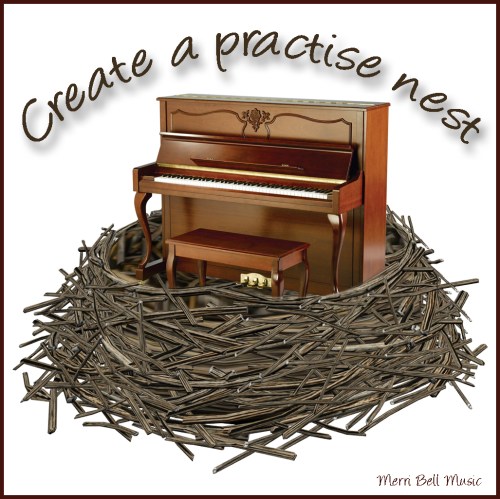 1. When choosing a location for your piano, select a space that is lived-in, welcoming, and well-lit. Keep it close to ‘the action’ but not in the action. Your children will gravitate to the piano more often if it is in a central place in your home. Avoid bedrooms, basements and other out of the way places. Feeling shut-off from the family while practising will inevitably lead to a reluctance to spend time on the piano.



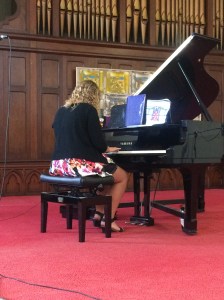
 Here are some ideas for ways you can help your child prepare for their big moment:
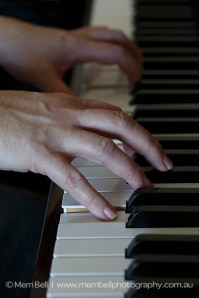 Make practise a priority! If children don’t practise, they don’t play well and they may start to believe they can’t play the piano. You have made a financial commitment to your child’s piano lessons, so they need to show the same level of commitment by practising, or your money will be wasted. Schedule it in with all their other commitments.
 I recently wrote a
 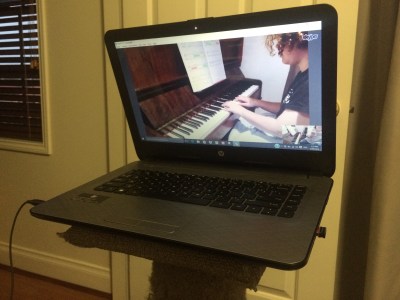 Lessons are missed for a variety of reasons apart from being too unwell to attend. Sometimes the student feels well enough for a lesson, but doesn’t want to spread germs (which is appreciated). Or the teacher may be in that position. Transport also makes the list of reasons for absences; if the student can’t get to the studio, they can still be available at that time, from the comfort of their own home. Weather and traffic issues are other problem areas.
 The student needs to be responsible for their own note-taking and marking their music. A good connection is required (wired is more reliable than wifi) and it helps if other household members can refrain from using the internet during the lesson. Larger screens are better (laptop, iPad for example), positioned high enough that the keyboard and hands can be clearly seen. A little ingenuity may be required, but that’s all part of the fun.
 If you are considering music lessons for your child or for yourself, please
  There are various benefits for singing during piano lessons:
 It is certainly more difficult to encourage students to sing than it is to get them to play, as singing seems to involve displaying a little more of ourselves, but it is this inner emotion we are trying to release. This is what we need in our playing. Once the students open up and let go, understanding how the music feels, they can really put some energy and feeling into what they’re playing.
 merri bell music